
Greylisting in email explained: why first sends get deferred
Greylisting acts as a temporary checkpoint for new or unfamiliar senders. When you send an email for the first time, mail servers may respond with a soft 4xx reply, essentially asking you to try again later. Legitimate mail transfer agents (MTAs) will retry sending; many spam bots will not. This simple step reduces unwanted mail without requiring heavy filtering.
This is why brand-new email campaigns often see their first attempts delayed. This isn’t a sign of failure, rather, the server is looking for proof that a genuine sender is behind the connection. After your system retries, successful deliveries typically proceed faster on subsequent attempts.
How greylisting works at SMTP: temporary 4xx codes and provider retries
Greylisting depends on temporary SMTP response codes. When your server receives a 4xx code, it should keep the message queued for a retry later. Common 4xx responses include:
- 421 Service not available, try again later.
- 450 Mailbox unavailable, temporary condition.
- 451 Requested action aborted, server error in progress.
- 452 Insufficient system storage, temporary throttle.
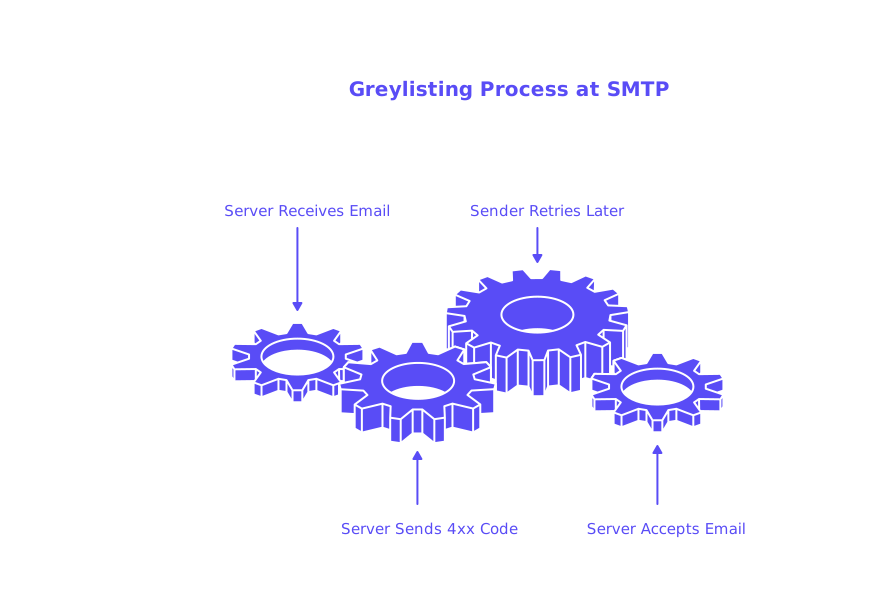
Many systems keep track of a unique combination, termed a triplet, which includes the sender IP address, the envelope from (return-path), and the recipient. The server will defer the first attempt for each unique triplet. When your MTA retries after a safe interval, the server then whitelists this triplet for a specified period.
451 4.7.1 Temporary rate limit. Please try again later.
Such responses are normal during the early stages of sending. To ensure success, keep the envelope information consistent across retries so the triplet can be matched correctly.
Why new domains and new IP addresses face greylisting more often
New sending identities have no history with receiving providers, who therefore have no prior behavior to assess for trustworthiness. Fresh domains, new IPs, or dedicated routes appear riskier, especially if sudden volumes of email are involved. Greylisting offers a safe way for providers to verify these new identities before acceptance.
Weak or improper email authentication can make things worse. Issues like misaligned SPF records, missing DKIM signatures, or gaps in DMARC policies will result in more deferrals. Additionally, issues such as mismatched HELO/EHLO names or a lack of reverse DNS can add further friction. While low engagement history is less relevant in this stage, proper technical configuration is essential.
How to pass provider retries and exit the greylist safely
Your MTA should retry within the provider’s specified window, following correct backoff practices. Avoid bombarding the remote host with retries. Spread out retry attempts with randomized jitter to prevent sudden surges. Maintain consistency in the envelope sender and recipient and keep the Message-ID unchanged between retries.
- Treat 4xx errors as temporary, keeping your emails queued rather than failing them.
- Implement exponential backoff with random jitter for your retry strategy.
- Limit the number of emails sent in parallel to each domain during initial sending phases.
- Reduce concurrency for new IPs and new domains.
- Cease retries after a reasonable time-to-live (TTL) to prevent endless loops.
After a few successful retries, you’ll usually see servers stop deferring similar emails. Controlled pacing and message consistency are essential for success.
Technical signals that reduce greylisting probability across providers
Start by ensuring your sender identity is properly authenticated; align your SPF record with the exact return-path you use. Sign every message with DKIM, keeping the selector consistent. Publish a DMARC record with a conservative policy as you begin sending. Ensure that your IPs have a forward-confirmed reverse DNS setup, which verifies that the hostname returned by a DNS lookup matches your original IP.
Match your HELO/EHLO SMTP banner to a publicly resolvable hostname, this small step positively influences trust. For more on this, see the importance of HELO/EHLO in sender reputation. Additionally, enable TLS, favor modern ciphers, verify your MX configuration, and keep attachment patterns predictable during initial sends.
Queue management and retry strategy that respects temporary 4xx deferrals
Design your mail queue policies to handle greylisting gracefully. Adopt a tiered backoff process: brief delays for early retries, then medium and longer increments later. Add jitter to prevent all retries from syncing up. Monitor queue depth and delay per domain. Limit the simultaneous connections to each destination (concurrency) to avoid thundering herds, a situation where excessive simultaneous requests overwhelm the server.
Track individual message outcomes, recording every 4xx code and next attempt time. Do not change message content or headers between retries, as some systems score altered payloads as new attempts. Consistency, in the envelope, headers, and body, until final delivery, is crucial.
Greylisting patterns at Gmail, Outlook, and Yahoo you should expect
Email providers frequently update their filters and processes, yet common patterns still surface. Gmail tends to evaluate identity, sending rate, historical consistency, and the path your message takes to reach the inbox. For more detail, read about Gmail API versus SMTP relay deliverability considerations before settling on your sending route.
Microsoft tenants quickly enforce connection limits for new senders or IP addresses. Yahoo may defer sudden volume spikes from fresh domains. Across all three, authentication and slow, steady volume ramps lead to best results. None of them respond well to abrupt, large-scale sends from unproven identities.
Monitoring greylisting with logs, a spam checker, and list hygiene
Monitor three key metrics closely: your rate of first-attempt acceptances, the average number of retries, and the percentage of 4xx responses per provider. Track these daily for the first few weeks of a new campaign. Use the trends to correlate with any sending changes.
Test your messages with a spam checker to find risky subject lines, header problems, or other fingerprint issues before sending. Combine this with a blacklist checker to quickly catch IP or domain listings. Use an email checker to clean your list before sending, weeding out problematic addresses and reducing hard bounces. This routine helps protect your sender reputation as greylisting issues resolve.
Make sure to distinguish between temporary and permanent delivery failures. Review the latest guidance on the 2026 bounce rules and delivery failures to ensure your system handles each type properly.
When a structured warm-up removes greylisting friction
A gradual, structured warm-up period builds the history that helps bypass greylisting. Start with low daily volumes and keep your sending identity stable. Increase send rates only as your acceptance and 4xx metrics improve.
If you require assistance in methodically increasing your email volume, a process also known as a managed ramp, you might consider using a service like Mailwarm. Mailwarm interacts with a private network of over 50,000 active mailboxes to simulate organic opens, replies, spam rescue, and primary inbox signals. As of February 2026, Mailwarm introduced next-generation features including multi-account management, advanced analytics for deliverability and reputation, provider-specific spam score tracking, and multi-provider warm-up, all designed for reliable performance at scale.
Move past greylisting with a steady, authenticated sender footprint
Greylisting isn’t a blockade, it's a checkpoint. Demonstrate that you’re consistent, authenticated, and patient. Keep your queues efficient, retries respectful, and email identities well-aligned. Most temporary deferrals will eventually give way to first-try deliveries.
If you need guidance developing a strong sender reputation, start by committing to a disciplined warm-up and tracking your results weekly. When you’re ready, apply these best practices and take control of your deliverability journey.
FAQ
Why are my first emails often delayed when sending from a new IP or domain?
Greylisting is a deliberate delay mechanism used by servers to assess the authenticity of new senders. This challenge-response method forces real senders to reattempt delivery, effectively filtering out spammy operations that aren't persistent.
How can Mailwarm assist in addressing greylisting issues?
Leveraging Mailwarm's managed ramp feature accelerates your domain's warm-up, simulating authentic engagement and building email reputation. This strategic increase in trust can help bypass greylisting constraints and achieve quicker inbox placements.
What SMTP response codes indicate greylisting, and what should I do?
Response codes like 421 and 451 indicate temporary blocks; your server should queue the emails for retries. A measured retry strategy with exponential backoff is vital to avoid overwhelming the receiving server.
Can poor email authentication affect greylisting outcomes?
Yes, lacking proper SPF, DKIM, and DMARC configurations significantly increases deferral chances. Without these records, your emails scream 'untrustworthy', forcing servers to delay them as potential threats.
Why does Yahoo or Gmail often defer emails from new senders more than others?
Major providers are cautious with novel identities; they prioritize established reputations to protect users. Sudden volume spikes from unvetted sources immediately raise red flags, resulting in strategic deferrals.
How can I ensure my retries after greylisting are successful?
Consistency and patience are key. Ensure your message details remain unchanged between retries, and follow a staggered retry schedule. Rushing or altering messages leads to elevated scrutiny and potential failure.
Is structured warm-up necessary for overcoming greylisting?
A structured warm-up builds sending history, crucial for moving past greylisting bottlenecks. This carefully staged approach, supported by Mailwarm, fosters trust and stabilizes sender reputation for smoother future sends.
What risks arise from ignoring greylisting protocols in email campaigns?
Disregarding these protocols can damage your domain's reputation, resulting in increased bounces and even permanent blocks. Accept greylisting as a necessary hurdle to safeguard long-term deliverability.
What is the biggest misconception about managing greylisting?
Many overlook the importance of sender identity consistency; it's not just about hitting send repeatedly. A coherent and stable sender footprint is non-negotiable for overcoming the greylisting phase effectively.