
Cold Email Follow-Up Re-Engagement Starts with Inbox Placement, Not Just Clever Copy
Your second or third email doesn’t get ignored because prospects dislike follow-ups; more often, it’s simply not being seen. Email filters evaluate your sender reputation, authentication settings, and prior engagement before allowing your message into the recipient’s main inbox. If you want your follow-ups to be read and receive replies, focus first on being visible in the inbox.
Imagine your process from the perspective of a mail server. It reviews your domain’s configuration, your history of recipient complaints, and your sending habits. Even a small improvement here can move dozens of your follow-ups from the “Promotions” or “Spam” tab to the primary inbox, a shift that significantly boosts re-engagement outcomes.
If your email never lands in the inbox, it never gets a chance to convert. Inbox placement is the real gatekeeper.
Build your follow-up strategy around deliverability from the start. Once you establish inbox placement, your timing, sequencing, and CRM hygiene have the opportunity to be effective.
How to Re-Engage Prospects: Threaded Cold Email Follow-Ups and Respectful Cadence
Whenever possible, reply within the same email thread. A true reply preserves the In-Reply-To and References headers, which helps maintain conversation context. Most spam filters view threaded messages as less risky. Avoid tactics such as using deceptive “Re:” subject lines, as filters can easily detect and penalize such tricks.
Allow space between follow-ups. Many teams find success with two or three follow-ups, each spaced a few days apart. Sending daily messages trains both email filters and recipients to ignore you. In every follow-up, keep a single, clear reason for contacting the recipient, don’t overload your message with multiple requests.
Make it easy for recipients to opt out. Including a clear, simple opt-out line reduces complaints and helps protect your deliverability. If prospects remain silent after your final follow-up, respect their decision. Continuing to message after obvious disinterest does more harm to your sender reputation than good for your pipeline.
Technical Checklist: Avoiding Spam Folders and Maintaining Trust in Cold Email Follow-Ups
Authenticate and Align Your Sending Identity
- Publish an SPF record for your domain and keep it concise. Remove unused entries and flatten the record when possible to avoid lookup problems.
- Sign outgoing mail with DKIM using a modern 2048-bit key and rotate keys regularly for security.
- Set up DMARC monitoring with
p=none, then transition to a more restrictive policy (quarantine or reject) once stable. Ensure your From domain aligns with SPF or DKIM.
Address Core Server and Domain Signals
- Configure your HELO/EHLO command to match a hostname that resolves with a valid reverse DNS (PTR) record.
- Maintain working MX records for your domain, even if you only send mail, since some providers require their presence.
- Serve TLS correctly and ensure your certificates are current, as mismatches increase risk.
Sending Practices that Mimic Human Behavior, Not Automated Spam
- Warm up a dedicated subdomain for cold outreach. Keep corporate emails separate by using your primary (root) domain to ensure professional communication and prevent important messages from being lost.
- Gradually throttle your sending. Sudden increases in volume lead to reputation reviews and more frequent filtering during your follow-up campaign.
- Avoid link shorteners and excessive tracking parameters, as they are often flagged by filters.
- Use minimal images and avoid large attachments in your follow-ups. Simple plain text or lightweight HTML increases deliverability.
Check our Top Cold Email Services in 2026 Blog Article, to learn more about the tools we recommand.
Why Mailbox Warm-Up Is Essential for Cold Email Follow-Up Success
Follow-ups are more effective when inboxes expect you. That expectation develops through steady, positive engagement. Mailwarm helps you build this expectation by sending legitimate interactions across a broad network of active mailboxes, opening emails, replying, rescuing messages from spam folders, and tagging them as positive engagement. These signals boost your sender reputation before prospects even see your name.
Mailbox warm-up is not about marketing, it’s about creating a track record of legitimate activity that makes spam filters more likely to accept your follow-ups. This is crucial if your sending volume increases or if you’ve made changes to your domain.
Plan your warm-up phase before any outreach scaling. For practical pacing advice, see our guide on email warmup schedules for sending thousands of emails per day, which will help you determine the right schedule and safely add follow-ups without causing sudden spikes.
Measuring What Matters in Cold Email Follow-Ups: Inbox Placement and Bounce Patterns
Email open rates can be misleading. Privacy protections often obscure opens, and some recipients preview messages without loading tracking pixels. For re-engagement, the key question is simple: did your message reach a real inbox?
- Monitor where your email is placed in the inbox, known as inbox placement, with test emails (seeds) and controlled test scenarios. Aim for consistently reaching the inbox across major providers.
- Track complaint rates and the frequency your messages land in spam folders. Small increases can be early indicators of wider filtering in future follow-ups.
- Segment bounce types. A hard bounce should be removed as soon as possible, preferably before the next round of emails is sent out. A soft bounce usually indicates a temporary issue or a problem with your reputation.
For more insights, read our research on cold email inbox placement benchmarks and best practices to understand how deliverability shifts as you add follow-ups.
Seeing more bounces after a follow-up wave? This may be due to newly implemented authentication requirements or exceeded rate limits. Learn more in our article on why emails bounce and how current delivery rules affect you. Fixing these root causes early prevents gradual deliverability decline during future campaigns.
Operational Guardrails for Respectful, Compliant Cold Email Follow-Up
- Adhere to local regulations and platform policies, support one-click unsubscribe options for bulk campaigns as required.
- Maintain a global do-not-contact list and synchronize it across every sending platform and user mailbox.
- Limit contact attempts per prospect to two or three thoughtful follow-ups, helping to protect your brand and sender reputation.
- Stop contacting a prospect after you receive an explicit “no,” an unsubscribe, or a spam complaint. Remember, silence often means “not now.”
- Ensure there are no duplicate messages sent across teams, multiple nudges from different representatives quickly destroy re-engagement chances.
Practical Workflow: Preparing Cold Email Follow-Ups That Don’t Get Ignored
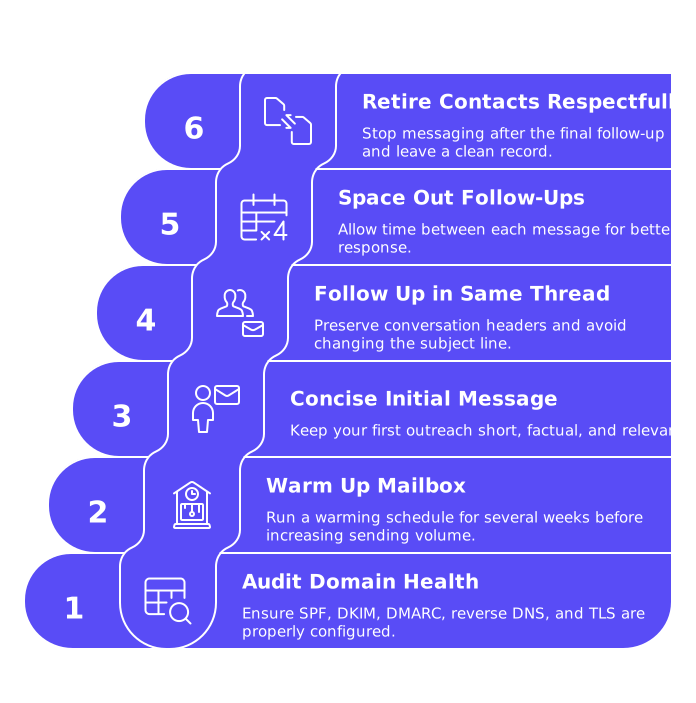
- Audit your domain’s health. Make sure SPF, DKIM, DMARC, reverse DNS, and TLS are properly configured and any misalignments are resolved before your next campaign.
- Warm up your mailbox. Run a warming schedule for several weeks before you increase sending volume.
- Start with a concise initial message. Keep your first outreach short, factual, and relevant to the recipient’s position.
- Follow up within the same thread. Preserve conversation headers and avoid changing the subject line.
- Space out your follow-ups. Allow time between each message, both filters and recipients will respond better.
- Retire contacts respectfully. Stop messaging after your final follow-up and leave a clean record for any future outreach.
This workflow is designed for long-term sender reputation. Treat every follow-up as a chance to prove you belong in the inbox, not as an excuse to increase pressure on your prospects.
Troubleshooting Cold Email Follow-Up When Replies Slow Down or Filters Tighten
Watch for These Warning Signs
- An increase in complaints or unsubscribes after your second follow-up.
- New domains or IP addresses showing lower inbox rates than established ones.
- Stronger filtering from certain providers (such as large webmail services).
Quick Fixes to Restore Deliverability
- Pause all new sending for 48–72 hours while continuing your warm-up activity.
- Remove all recent hard bounces and role-based email accounts from your recipient list.
- Limit the number of links to a single destination and replace any shortened URLs with full, clear domains.
- Temporarily reduce sending volume, then gradually scale up again following a careful warm-up approach.
Bringing it Together: Re-Engage with Credibility, Patience, and Technical Precision
Re-engagement succeeds when both email filters trust you and prospects feel respected. Focus on warming your mailbox, authenticating your domain, and replying within the original thread. Limit follow-ups, provide easy opt-out options, and measure true inbox placement rather than vanity metrics. This balanced approach wins you the quiet “yes” that many follow-up campaigns miss.
Ready for your next follow-up to reach decision makers? Try a gentle Mailwarm schedule before your outreach effort. Learn more and get started at Mailwarm: Steady inbox placement for real conversations.
FAQ
Why isn't clever email copy enough for follow-up success?
The best copy is worthless if your emails don't land in recipients' primary inboxes. Email filters prioritize sender reputation and deliverability over content brilliance. Without solid technical groundwork, your messages are invisible.
How can threading emails improve deliverability?
Threaded emails maintain conversation context, making them less suspicious to spam filters. Avoid deception in subject lines; filters identify and penalize such tactics, harming your deliverability.
Why is warming up a mailbox crucial for fresh domains?
Cold new domains are scrutinized intensely by spam filters. Mailwarm helps by fostering legitimate email activity, thus establishing a trusted sender reputation ahead of your outreach.
What technical factors should be address to dodge spam folders?
Ensure SPF, DKIM, and DMARC are properly configured, and align your sender identity. Failing to address these tech essentials dooms your emails to perpetual filtering.
How can I measure cold email effectiveness beyond open rates?
Inbox placement is the key metric; merely tracking opens can mislead due to privacy shields. Use test emails to verify placement and adjust strategies based on complaint and bounce data.
What's the impact of ignoring opt-out requests in follow-ups?
Disregarding opt-outs damages your sender reputation and leads to higher complaint rates. Ignoring silence as 'not interested' invites spam complaints, eroding brand credibility.
Should I pause sending if my deliverability drops?
Absolutely, halt new sends to reassess and address potential issues. Persistent issues ignored amplify damage; a methodical pause lets you regain control and correct errors before resuming outreach.
Why is spacing between follow-up emails important?
Over-eager follow-ups teach both filters and recipients to dismiss your messages. Space allows for introspection and reduces the signal of automated spam, preserving your email’s chance to engage.