
Email Deliverability in 2026: How Link Shorteners and Branded Tracking Domains Factor In
Every link placed in a cold email sends a signal about your sender reputation. Filters examine not just the destination domain, but also the entire redirect chain and domain patterns. By 2026, these checks have become more rigorous, particularly for new or cold senders. So, which approach poses a greater risk: using public link shorteners or setting up branded tracking domains?
This guide explains how modern filters analyze each link strategy and introduces safe ways to evaluate your links without jeopardizing sender reputation. For more insight on inboxing trends, see our analysis of cold email inbox placement benchmarks and best practices.
How Public Link Shorteners Affect Email Deliverability and Spam Filters in 2026
Public link shorteners place your URL on a domain shared with countless other users. The reputation of that domain isn’t under your control. If bad actors abuse a public shortener, their misdoings may affect your deliverability due to the shared domain reputation.
Spam filters also distrust open redirect patterns, which many shorteners enable, allowing redirection to any target. This technique is commonly exploited in phishing campaigns, resulting in quick domain-level blocks by security systems.
Shortened links can additionally trigger “mismatch” rules, where your email’s visible sender domain differs from the link’s domain. This contrast alone may not block delivery outright, but frequently undermines placement, especially in cold outreach.
Moreover, public shorteners create a recognizable footprint across email streams. Advanced filters spot and associate this pattern with past abuse, often applying extra scrutiny and heavier throttling to new senders.
Why Branded Tracking Domains Usually Carry Lower Deliverability Risk
A branded tracking domain is a subdomain you own, such as links.example.com. It's typically mapped by CNAME to your tracking vendor, enabling click tracking via your own base domain.
This configuration aligns your link domains with your sender identity, making it easier for reputation systems to associate your mail with a single brand. Over time, this helps you develop and protect your own private reputation.
Branded domains also help you avoid the collateral damage often seen with public shorteners. Because your branded subdomain only carries your history, good or bad, reputation remains yours to build and protect. Investing in branded domains allows you to control and maintain your own reputation, unlike the risk-sharing model of public shorteners.
However, brand-new tracking subdomains can appear suspicious to filters. It’s important to gradually “warm up” these subdomains, ensure they have a resolvable site and valid TLS certificates, and restrict open redirect configurations to prevent abuse.
Direct Comparison: Link Shorteners Versus Branded Tracking Domains for Deliverability
- Reputation control: Public shorteners share risk among all users. Branded domains isolate risk, giving you control over your own reputation.
- Abuse surface: Open redirects on public shorteners are common phishing tools. Branded domains let you limit redirects to trusted destinations.
- Identity coherence: Public shorteners can mismatch sender and link domains. Branded domains align with your overall brand identity.
- Forensics: Shared domains make for easier tracing, often resulting in group-level takedowns. Branded domains shield you from unrelated abuse.
- Cold outreach impact: Public shorteners draw more scrutiny from filters, especially in cold campaigns. Branded domains usually fare better if set up and warmed properly.
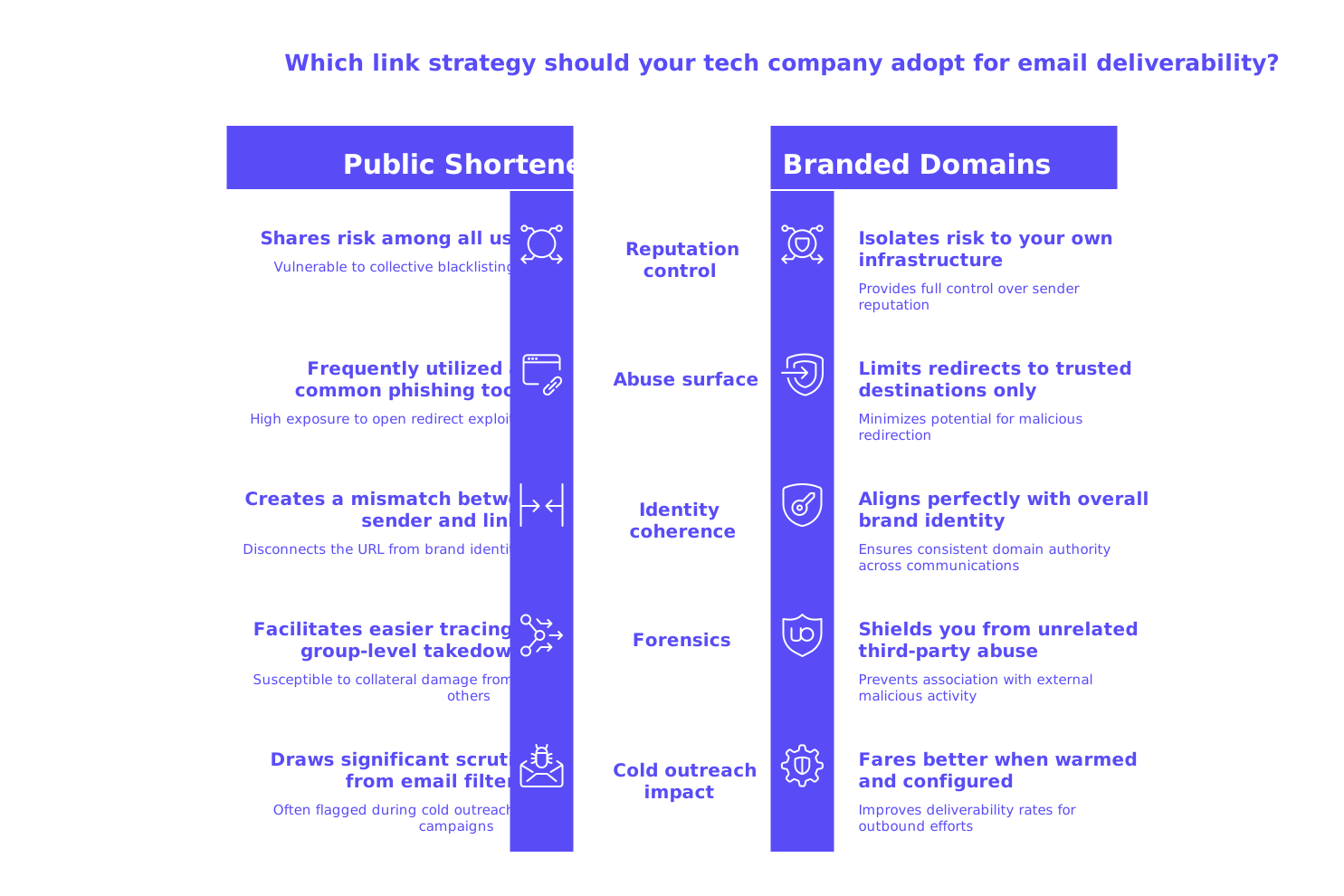
Net result for 2026: Public link shorteners often have a more negative impact on deliverability, especially in cold outreach, due to potential abuse by other users. Branded tracking domains offer better results, if you configure, warm, and monitor them carefully.
Deployment Checklist: Configuring Branded Tracking Domains for Safe Deliverability
Choose the Right Subdomain and DNS
- Use a clear subdomain, like links or go, under your primary domain.
- Point it with a CNAME record to your tracking vendor, and ensure the certificate chain is valid.
- Serve HTTPS with HSTS, and redirect HTTP traffic to HTTPS.
Lock Down Redirect Behavior
- Block open redirects to arbitrary domains.
- Allow only team-controlled destinations.
- Return 302 or 307 status codes for tracking, and keep redirect chains short.
Align Signals Around Your Mail Infrastructure
- Consistently apply your brand across From, return-path, and link domains.
- Review SMTP greetings, see how HELO impacts sender reputation.
- Maintain compliant SPF, DKIM, and DMARC records, as requirements are updated frequently.
If you experience bounces, review your policies. For the latest on why emails are rejected in 2026, see our new delivery rules breakdown.
Measurement and Testing: How to Evaluate Link Strategies Without Hurting Deliverability
Test the link domain before increasing your email volume. Begin by sending controlled emails to internal and friendly test inboxes, monitoring placement (not just open rates).
Utilize spam checking tools to evaluate your messages across leading providers, watching for URL-related warnings or blacklists. Follow up with blacklist checks to ensure your tracking subdomain and root domain remain unlisted.
Track your inbox placement metrics over time for a more comprehensive view, single snapshots rarely tell the whole story. Keep a systematic record of changes whenever you introduce a new redirect, tracking parameter, or change the link destination.
If placement shifts, adjust one variable at a time. Avoid altering content, sender, and link structure simultaneously to ensure clear diagnostics.
Warming Strategy: Introducing Tracked Links During Sender Reputation Warm-Up
Start your mailbox warm-up period without any links. Once you observe steady inbox placement, introduce a single branded link. Gradually increase the number only after stability is confirmed, maintaining a consistent structure as your reputation grows.
If you need structured warm-up, consider a platform like Mailwarm. It simulates natural mailbox interactions across its network of over fifty thousand active, maintained mailboxes. As of February 2026, Mailwarm has evolved into an advanced email warm-up solution, offering multi-account management, detailed deliverability and reputation monitoring, multi-provider warm-up, and real-time spam score tracking for high-volume operations. In this workflow, emails function primarily to build reputation and correct spam placement rather than as marketing sends.
Operational Tips for Links That Protect Email Deliverability in 2026
- Prioritize your branded tracking domain over public shorteners.
- Ensure destination sites are fast, secure, and use TLS 1.2 or above.
- Avoid excessive links, one to three is typically sufficient.
- Remove any URL parameters that lack clear analytic value.
- Rotate tracking domains only when necessary, frequent changes appear suspicious to filters.
- Monitor server logs for unusual spikes in 4xx or 5xx errors on your tracking host.
- Enable rate limiting and bot detection on redirect endpoints.
Troubleshooting: When Links Still Trigger Placement Issues
- Validate DNS configurations and TLS status for your tracking subdomain.
- Inspect robots.txt and all security headers for misconfigurations.
- Run spam checks and examine raw email headers for filtering clues.
- Minimize the number of redirects and eliminate any unnecessary vendor nesting.
- Reduce your link count and retest with the same copy for better clarity on the cause.
- Verify that your link destination is not listed on any URL blocklists.
- Warm the tracking subdomain slowly, encouraging replies to build history.
Final Verdict for 2026: Which Option Hurts Deliverability More?
Public link shorteners generally have a more negative impact on deliverability in 2026, mainly due to domain-level issues and their association with phishing tactics. Branded tracking domains offer better results when properly configured, secured, and methodically warmed like any other sender surface.
If you want to adopt a safer link strategy and build a strong reputation, start by deploying a branded tracking domain, run a thorough spam check, and warm it up gradually. For a more guided approach, try a dedicated warm-up platform to track inbox placement and sender reputation week by week.
FAQ
What are the risks of using public link shorteners for email campaigns?
Public link shorteners expose you to shared domain reputation and vulnerabilities from malicious activities. This can result in your emails getting flagged as spam due to bad actors sharing the domain. Rely on a more controlled setup like branded tracking domains to mitigate these risks.
How do branded tracking domains enhance email deliverability?
Branded tracking domains provide a dedicated reputation, aligning your link structure with your branding. They reduce the risk of being penalized for others’ infractions and help protect your email sender identity from getting blacklisted.
Why should I avoid new or untested tracking subdomains for emails?
New or untested tracking subdomains can be suspicious to spam filters and challenge deliverability. Properly warm them up gradually, establish credibility with time, and ensure robust configurations to gain trust from ISPs.
What strategic steps can be taken to integrate tracked links without affecting deliverability?
Begin your warm-up without links, introduce branded links incrementally upon stable placement, and monitor responses. Using a platform like Mailwarm can streamline this process by simulating authentic user interactions and maintaining steady improvement in deliverability.
How do I diagnose link-related email deliverability issues?
Regularly evaluate your DNS settings, TLS status, spam indicators, and blacklist standing. Adjust one variable at a time to pinpoint the problem, and make necessary optimizations, such as shortening redirect chains and enhancing host configurations.
What measures can prevent link-redirection from flagging emails as spam?
Limit redirections strictly to approved domains, avoid open redirects, and ensure all redirects are HTTPS secure. Extensive monitoring of link interactions and employing rate limiting can further shield redirection reliability.
Why is it important to consider link strategy during a sender reputation warm-up?
Link strategies are critical in building reputation, as inconsistent or poorly managed links may undermine deliverability. Starting with minimal, branded links during warm-up promotes steady reputation establishment and reduces abrupt shifts in email performance.
What common assumptions lead to poor link strategy results?
Relying on shorteners for convenience can jeopardize delivery due to shared risks and neglecting long-term reputation building. Proactive reputation management via branded domains avoids pitfalls associated with quick fixes.