

Most advice about email engagement metrics is still stuck in the past.
Teams still obsess over opens. They celebrate inflated dashboards. They tweak subject lines for tiny gains while ignoring the signals that shape inbox placement, sender reputation, and revenue. That approach is lazy, outdated, and expensive.
Open rate still has a place, but it's no longer the metric to build a strategy around. Modern email programs need a wider view. They need to track whether messages land in the inbox, whether recipients interact meaningfully, whether lists stay healthy, and whether campaigns drive replies, conversions, and revenue.
The practical reality is simple. If a mailbox provider sees wanted mail, reputation improves. If it sees weak engagement, bad list hygiene, or suspicious behavior, inbox placement gets worse. Everything else is downstream from that.
What Are Email Engagement Metrics
Email engagement metrics are the signals that show whether your email is wanted, ignored, or creating risk. That includes what happens before the read, during the read, and after it. Delivery still matters, but in 2026 the better question is whether recipients interact in ways that mailbox providers and your business both value.
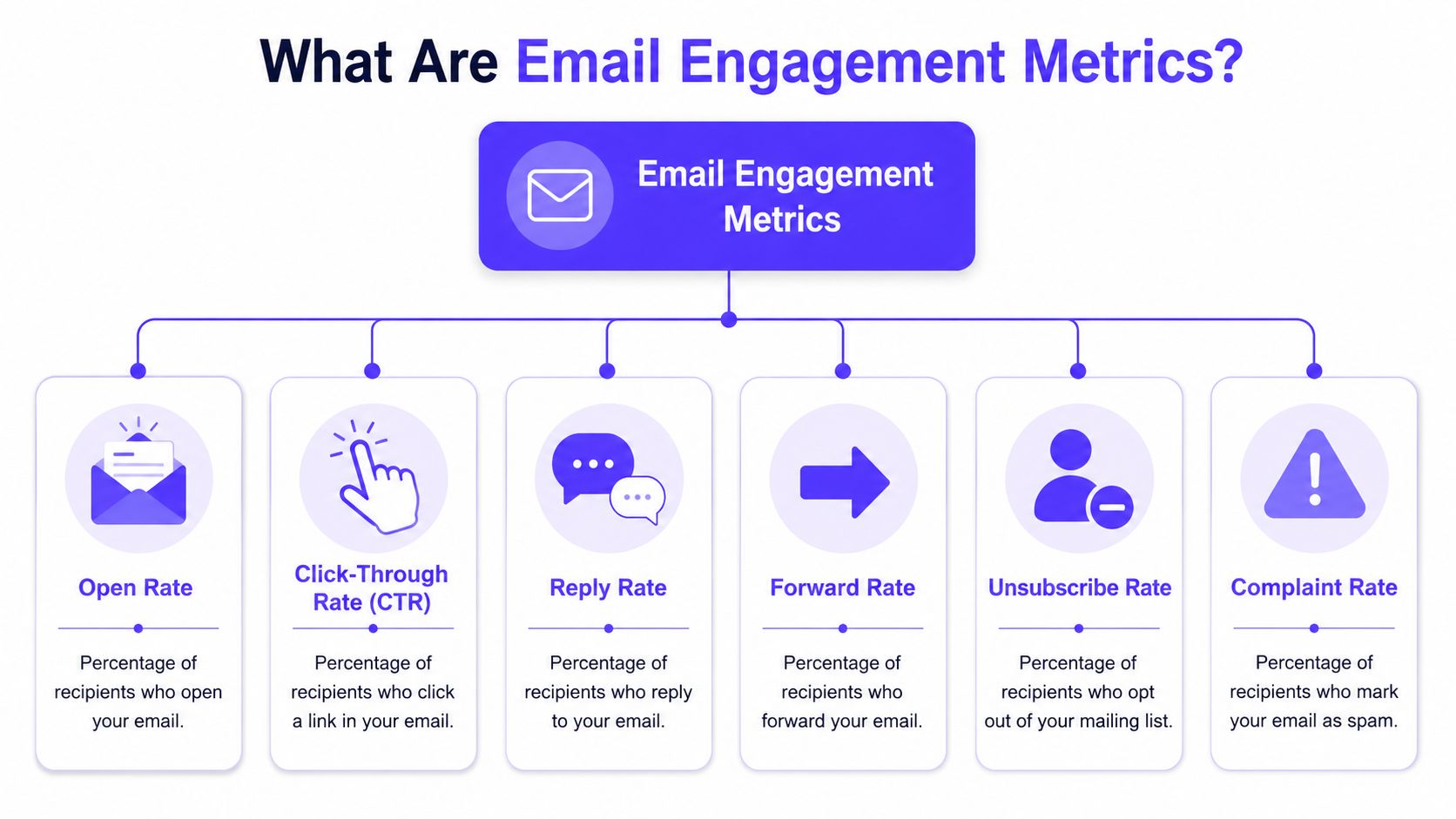
Open rates belong in the background, not at the center of your reporting. Apple Mail Privacy Protection broke the old habit of treating opens as proof of interest, and mailbox providers now weigh stronger signals such as replies, thread continuity, low complaint activity, and secure sending behavior. If your program still treats opens as the headline metric, your dashboard is behind the market.
Core definitions
Inbox placement rate
The share of messages that reach the inbox instead of spam or promotions. This matters more than raw delivery because accepted mail can still be buried or filtered. If you need the broader context, review how sender reputation affects inbox placement.Open rate
The percentage of delivered emails that registered an open. Use it as a weak directional signal only. It can suggest subject-line pull, but it cannot confirm real human attention.Click-through rate or CTR
The percentage of recipients who clicked a link. This is a stronger engagement signal than opens because it reflects an intentional action.Click-to-open rate or CTOR
The percentage of opens that turned into clicks. CTOR can help diagnose whether the body copy and offer matched the subject line, but it still depends on open tracking, so keep it in context.Reply rate
The percentage of recipients who responded. For outbound, lifecycle, and relationship-driven email, this is one of the few metrics that signals genuine interest and can improve trust with providers when replies are legitimate.Bounce rate
The share of emails that failed to deliver. High bounce rates usually point to poor list hygiene, bad data, or reckless sending practices.Unsubscribe rate
The percentage of recipients who opted out. A rising unsubscribe rate means the targeting, frequency, or message quality is off.
The mistake is treating these metrics as separate scorecards. They work as a system. A healthy email program tracks reach, meaningful interaction, list quality, and downstream outcomes together.
That is why smart teams connect engagement reporting to conversions, pipeline, and revenue, not just campaign activity. If you want a clearer way to tie email performance to business results, study frameworks for email marketing ROI measurement.
Practical rule: Give dashboard space to metrics that help you improve inbox placement, confirm real interest, or measure business impact. Demote the rest.
Why Engagement Is the Key to Your Sender Reputation
Sender reputation isn't built by sending more email. It's built by sending email that providers interpret as wanted.
Mailbox providers watch behavior. They care whether emails are accepted, whether they reach the inbox, whether recipients interact, and whether negative signals pile up. That's why engagement metrics aren't just reporting tools. They're evidence.
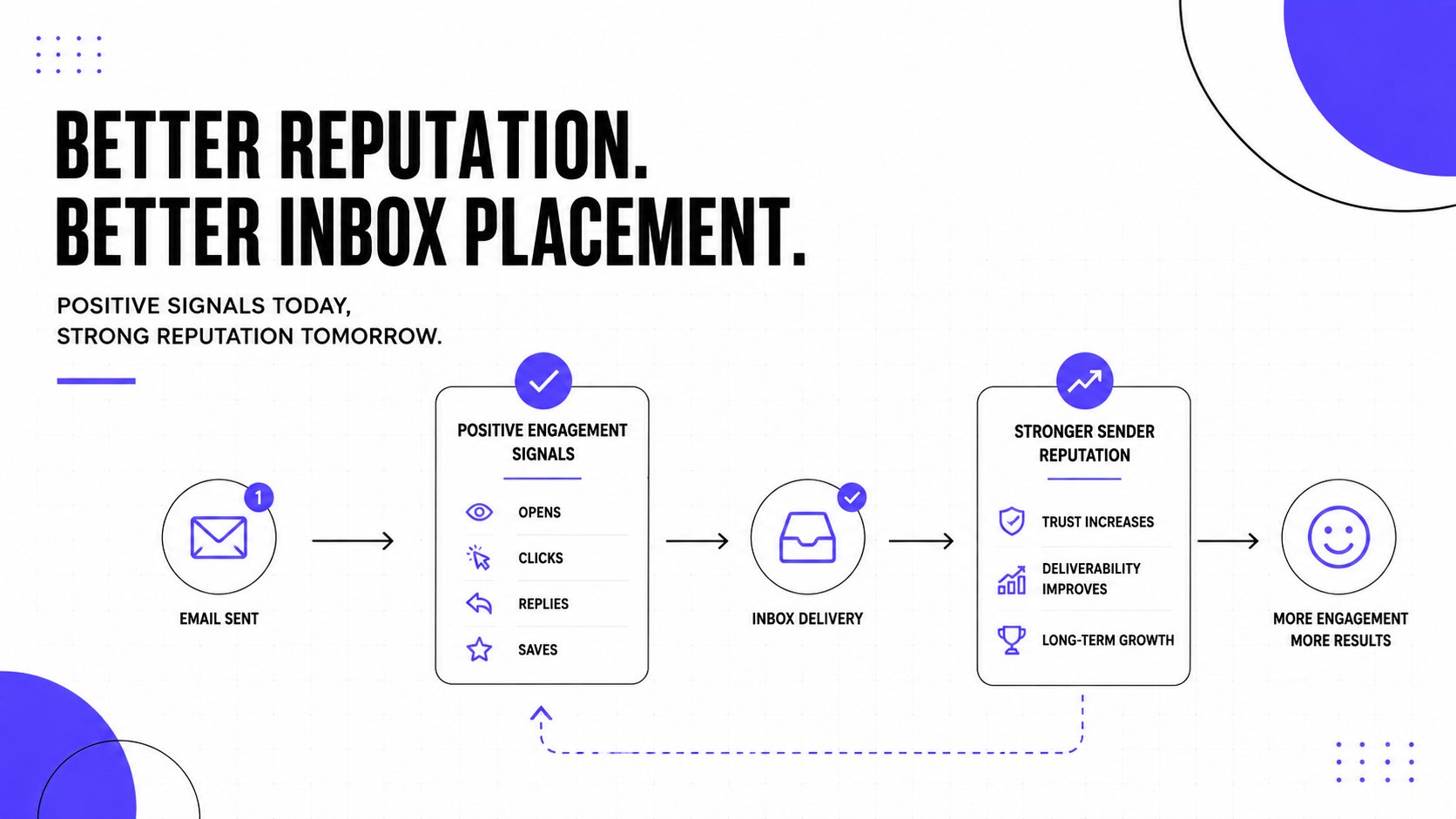
Positive engagement helps inbox placement
When recipients open, click, reply, forward, or convert, providers get a signal that the sender is legitimate and the message is relevant. That doesn't mean every campaign needs every action. It means healthy engagement patterns support deliverability over time.
A guide from eMercury distinguishes deliverability rate from inbox placement rate, which matters because server acceptance and actual inbox visibility are not the same thing. Inbox placement rate focuses on whether the message lands in the inbox rather than being accepted by the receiving server in the first place, as explained in this breakdown of sender reputation and placement.
Negative engagement damages reputation fast
Poor list hygiene and weak relevance show up quickly in the numbers. High bounces, rising unsubscribes, low interaction, and complaint patterns all make future delivery harder.
Many teams sabotage themselves by sending to stale contacts, overusing broad lists, and judging campaign quality by opens alone. Then they wonder why response rates collapse and messages start disappearing into spam.
Providers don't care how much effort went into a campaign. They care how recipients behave when it arrives.
Reputation is tied to business performance
A weak reputation doesn't just hurt one campaign. It reduces visibility across future sends.
That means more than lost opens. It means fewer clicks, fewer replies, lower conversions, and slower pipeline movement. In sales, that hurts meetings. In ecommerce, that hurts revenue. In recruiting, that hurts candidate response. In every case, email becomes harder and more expensive than it should be.
A strong program treats engagement as operational infrastructure, not cosmetic reporting.
A Guide to the 8 Key Email Engagement Metrics
Stop treating every engagement metric as equal. They are not. Some tell you whether people noticed the email. Some tell you whether they cared. Some tell mailbox providers whether you deserve future inbox placement.
That distinction matters more in 2026 than it did a few years ago. Google and Microsoft do not reward shallow activity the way many dashboards do. A weak open paired with a real reply can be more valuable than a high-open campaign that produces no conversation, no thread depth, and no sign of trust. For cold outreach context, compare your top-of-funnel visibility against cold email open rate benchmarks by industry, then move quickly to the metrics that show intent and sender quality.
Quick benchmark table
| Metric | What it shows | What to look for |
|---|---|---|
| Open rate | Basic attention signal | Use for trend monitoring only |
| CTR | Link interest | Review alongside conversion quality |
| CTOR | Body copy and offer strength after the open | Useful diagnostic, weak KPI on its own |
| Reply rate | Real intent and conversation potential | Track by sender, segment, and campaign |
| Read time | Whether the message was actually consumed | Useful for long-form emails and nurture |
| Spam complaint rate | Recipient rejection | Keep it as low as possible |
| Unsubscribe rate | Audience mismatch or send fatigue | Watch for spikes after changes in content or frequency |
| Bounce rate | List quality and sending discipline | Investigate any upward trend fast |
Open rate
Open rate measures the share of delivered emails that registered an open.
Use it carefully. Open tracking is distorted by privacy protections, image prefetching, and security filters. It can still help you spot a subject line problem or a sudden visibility drop, but it cannot tell you whether the message built trust, drove revenue, or helped your reputation with major providers.
Treat opens as an early warning light, not a success metric.
Click-through rate
CTR measures how many recipients clicked a link.
That is more useful than an open, but it still gets overrated. A click can signal curiosity, accidental taps, bot activity, or weak qualification. If CTR rises while conversions and replies stay flat, the email may be attracting the wrong kind of attention.
For promotional and lifecycle email, CTR still matters. For outbound and relationship-driven email, it often matters less than reply quality.
Click-to-open rate
CTOR measures clicks as a share of opens.
This metric is good for diagnosing message fit after the subject line did its job. If opens hold steady but CTOR drops, the body copy, CTA, or offer is missing the mark. If CTOR looks strong but downstream outcomes stay weak, the email is creating interest without creating action that matters.
Use CTOR to fix copy and structure. Do not use it as proof that the campaign worked.
Reply rate
Reply rate is one of the few engagement metrics that still deserves more attention than it gets.
A reply takes effort. A useful reply takes even more. That is why providers increasingly value response signals, thread continuation, and real back-and-forth over passive activity. For sales, recruiting, partnerships, and founder-led outreach, reply rate belongs near the top of the dashboard.
Do not lump all replies together. Positive replies, neutral replies, objections, and low-quality one-word responses mean different things. Track them separately.
Read time
Read time answers a harder question. Did anyone actually consume the email?
This metric is especially useful for newsletters, product education, onboarding, and founder updates. If recipients open but spend almost no time reading, the message is too long, too generic, poorly formatted, or irrelevant to the segment.
Read time works best as a diagnostic layer. It helps you tighten structure, shorten intros, and put the value earlier in the email.
Spam complaint rate
Complaint rate is one of the clearest signals that your targeting or permission standards are failing.
Providers take that signal seriously because it reflects direct user rejection. Even when complaint data is incomplete, the implication is obvious. Your message was unwanted enough that someone tried to stop it by force. That is a reputation problem, not just a campaign problem.
If complaints rise, cut volume, tighten segmentation, and remove any list source you cannot defend.
Unsubscribe rate
Unsubscribes are cleaner than spam complaints, but they still carry meaning.
A healthy unsubscribe rate shows that people had an easy exit. A rising unsubscribe rate shows your promise and your actual emails are drifting apart. That usually comes from poor targeting, weak expectations at signup, or sending too often.
Watch unsubscribe trends after any change in cadence, audience, or message type.
Bounce rate
Bounce rate reflects list quality, acquisition quality, and sender discipline.
Hard bounces usually mean you are sending to invalid addresses. Soft bounces can point to temporary mailbox issues, throttling, or provider resistance. Either way, rising bounce rates are a warning that your data hygiene or sending practices need work.
Do not accept bounces as normal overhead. Clean the list, suppress bad addresses quickly, and stop feeding mailbox providers evidence that your operation is careless.
The Most Common Mistake: Chasing Vanity Metrics
Open rate became the default email KPI because it is easy to report, not because it predicts inbox placement, revenue, or long term sender health.
That habit is now outdated.
Teams still celebrate opens and click spikes while Google and Microsoft evaluate stronger signs of trust. Replies. Ongoing threads. Message quality. Authentication consistency. Safe mailbox behavior. If your dashboard stops at opens, you are measuring the part providers care about least.
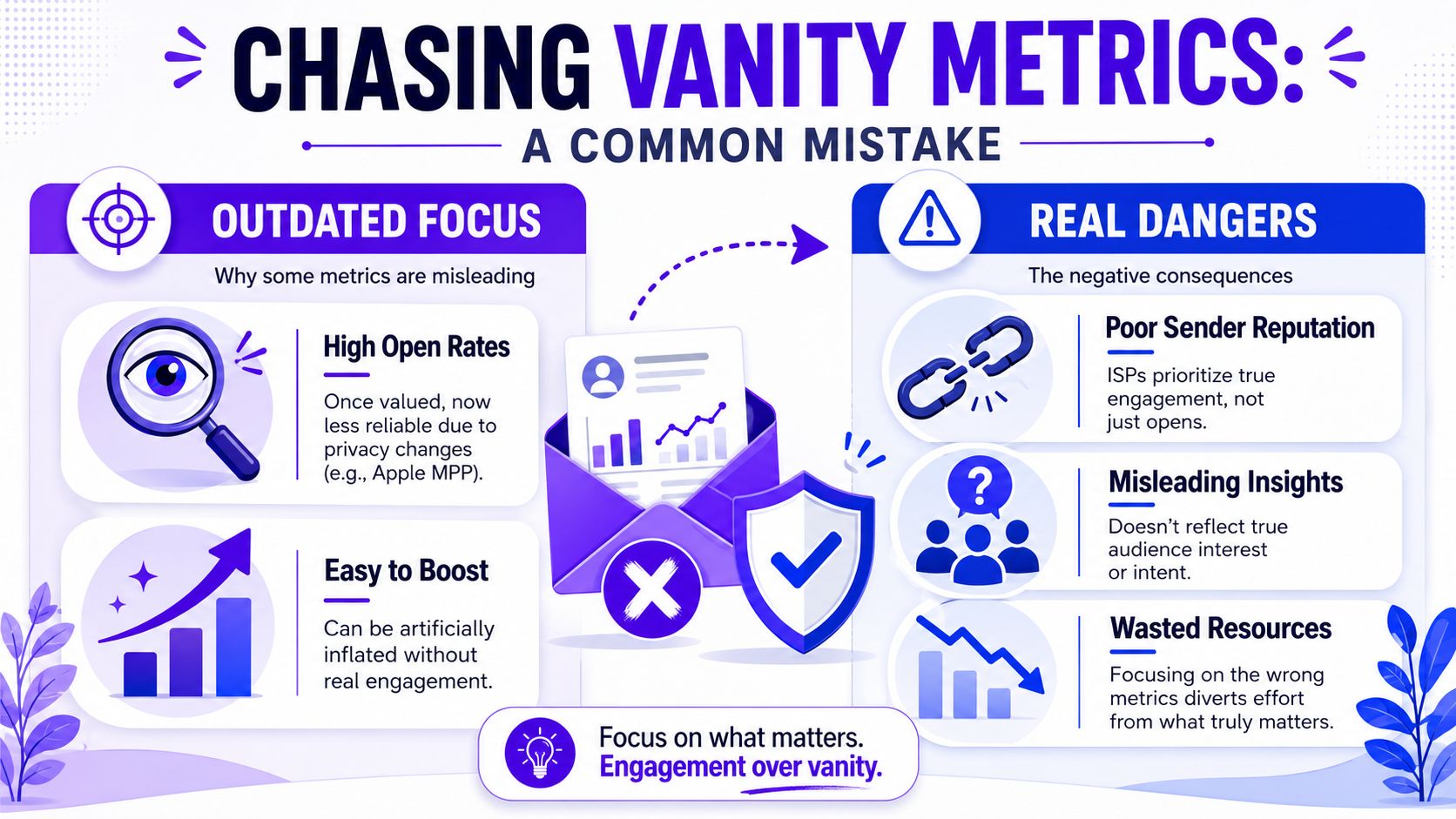
Why opens mislead teams
Opens are a weak proxy. They can signal that a subject line got attention, but they say very little about whether the message was wanted, trusted, or useful.
Privacy protections and image prefetching made open data noisy years ago. The bigger problem in 2026 is strategic. An email can post a healthy open rate and still fail where it counts. No replies. No conversions. No positive thread history. No sign that the recipient wants more from you.
B2B outbound teams get burned by this constantly. They ship campaigns that look fine in a weekly report, then wonder why reply quality is poor and inbox placement starts slipping.
What providers value more
Mailbox providers care about interaction quality. A reply is stronger than a click because it reflects intent. A real back and forth is stronger than a single reply because it shows the relationship is legitimate, not manufactured.
That is why positive interactions deserve more attention than vanity metrics. If you want the practical version, study these positive cold email engagement signals and build your reporting around them.
This section's video explains why shallow metrics often create false confidence.
A dashboard full of opens can hide a reputation problem until inbox placement is already damaged.
The security blind spot
Vanity metric dashboards also ignore a newer trust layer. Security signals tied to how accounts are accessed and how engagement is generated.
Google's Email sender guidelines make the direction clear. Providers expect authenticated, trustworthy sending practices. They are not only judging message content. They are judging whether the sending environment looks legitimate. Suspicious warmup patterns, unnatural interaction footprints, and risky mailbox access methods create the wrong signal set.
That matters because fake engagement does not protect reputation. It can weaken it.
What to track instead
A useful dashboard is narrower and tougher.
Inbox placement by provider
Delivery only tells you the server accepted the message. It does not tell you where it landed.Reply rate and reply quality
Count meaningful replies, not just any response. Auto-replies, polite brush-offs, and low-intent answers should not be treated as wins.Thread depth
Ongoing conversation is a stronger trust signal than a one-off interaction.CTR and CTOR for diagnosis
Use them to spot copy and offer problems, not to declare campaign success.Conversions and revenue per email
These are the outcome metrics that justify the program.
If your team needs examples of messages built for real response, not vanity clicks, review high-converting email sequences for businesses. The right sequence structure makes it easier to earn replies, continue threads, and produce measurable business results.
The rule is simple. Stop rewarding easy metrics. Reward signals that show trust, intent, and business impact.
Actionable Strategies to Improve Your Email Engagement
Most engagement problems are self-inflicted. The list is too broad, the message is too generic, the CTA asks for too much, or the sender starts cold at full volume without building trust.
The fix is operational discipline.
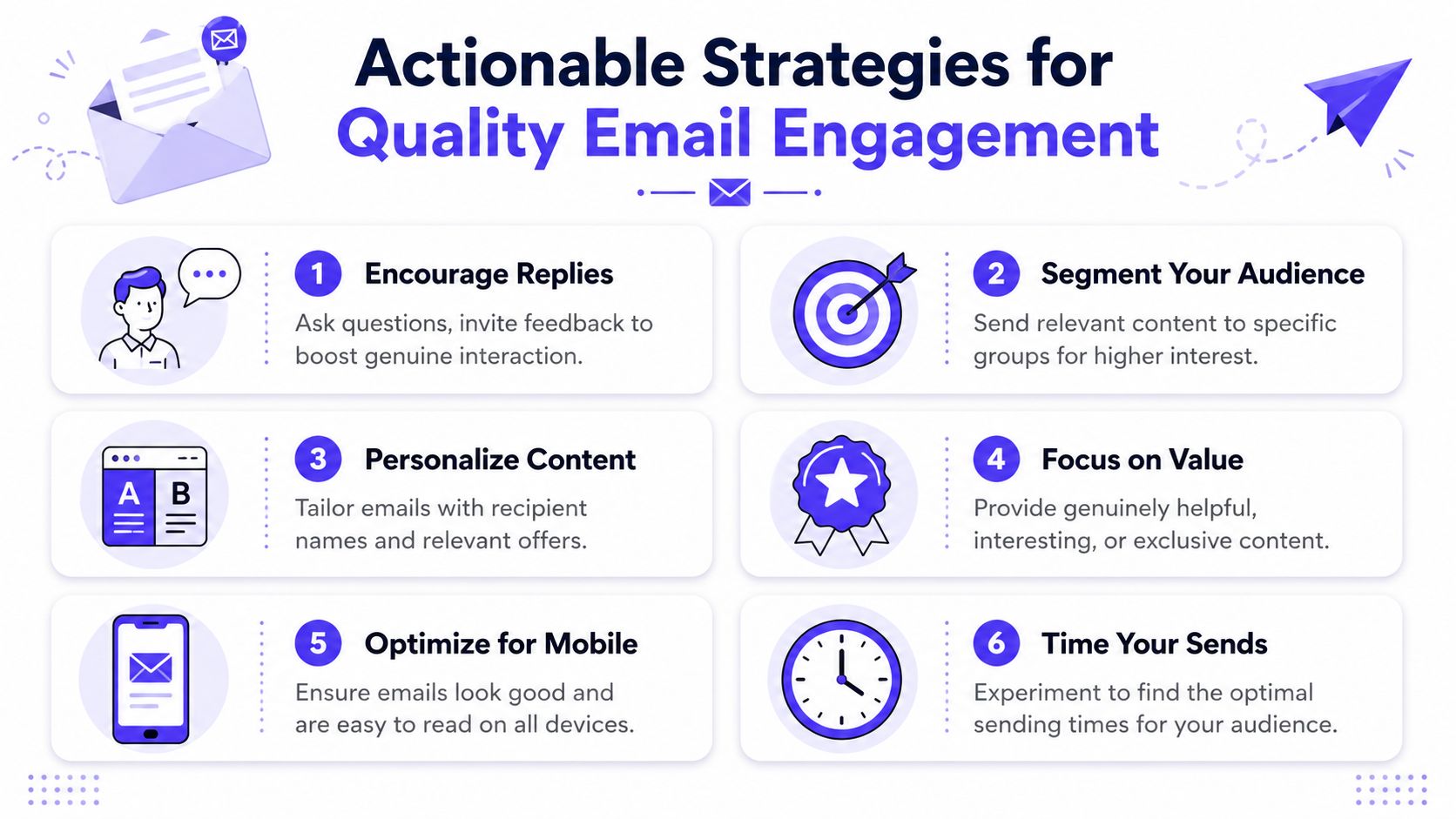
Start with relevance
Better engagement begins before the email is sent.
Segment by intent
Sales prospects, customers, trial users, newsletter readers, and recruiters should not get the same message.Match content to context
A cold outreach email should ask for a reply. A product update should drive clicks. A retention email should reinforce value.Write for one audience at a time
Broad copy lowers response quality because it sounds safe, not useful.
For teams building outbound flows, examples of high-converting email sequences for businesses are useful because they show how sequencing and message intent shape engagement quality.
Make replies easier
Reply rate doesn't improve because a team wants it to. It improves when the email lowers friction.
A direct question works better than a vague invitation. A small ask works better than a big one. Short emails usually outperform overloaded ones when the goal is response.
Field note: If the desired action is a reply, the email should read like a conversation starter, not a landing page in disguise.
Practical ways to increase response quality:
Ask one clear question
Don't stack multiple asks in one email.Use plain language
Clever copy often reduces clarity.Keep the first email short
The goal is momentum, not a full pitch.
Clean the list and protect the domain
This part gets ignored because it isn't glamorous.
A list with invalid or stale contacts drags down bounce rate and weakens reputation. Over-mailing disengaged segments raises the risk of negative engagement. Sudden volume spikes create unnecessary pressure. All of this is avoidable.
Teams should regularly suppress dead segments, remove obvious non-fits, and watch for signs of fatigue. Better list hygiene produces cleaner metrics and better delivery conditions.
Warm up before scaling
A new mailbox or a recovering domain should not jump straight into aggressive sending.
Warmup helps establish a pattern of legitimate behavior before larger campaigns begin. The key is to use systems that generate positive interactions that resemble real usage. Teams focused on cold outreach can also use practical frameworks for positive cold email engagement to shape warmup and campaign planning around the signals providers are more likely to trust.
How Mailwarm Improves the Metrics That Matter
Open-heavy warmup is outdated.
Mailbox providers now care far more about whether activity looks like legitimate human communication. That means replies, thread continuation, inbox placement, spam-folder recovery, authentication health, and secure mailbox access patterns. A warmup tool should improve those signals directly. If it does not, it is producing activity without building trust.
What a stronger warmup approach looks like
Mailwarm is an email warm-up and deliverability platform built to improve inbox placement, protect sender reputation, and reduce spam-folder placement. It uses 50,000+ aged real inboxes and generates engagement signals such as opens, replies, threads, spam removal, and important marking. It can also generate up to 100% replies to warmup emails depending on the plan.
That setup matters because sender reputation improves faster when warmup behavior resembles real mailbox usage. Mailwarm also includes spam score monitoring, inbox placement insights, provider-level warmup, authentication fix tools, bounce prevention, deliverability analytics, and expert deliverability calls. Those are the controls teams need when reputation slips or a new domain starts cold.
Why the no-IMAP point matters
Security affects deliverability.
Google has been explicit about tightening protections around Gmail access and requiring stronger authentication controls for senders, including for bulk email programs, as outlined in Google's sender requirements at support.google.com. Any warmup product that asks for broad mailbox access creates more risk than it should.
Mailwarm does not require IMAP access and does not need permission to read the user's private inbox. That is a meaningful design decision. It reduces exposure, avoids questionable mailbox-access patterns, and fits the way providers increasingly evaluate trust and account security.
Who should care about this
Teams that depend on outbound pipeline, client delivery, recruiting outreach, or lifecycle email should care. Founders, SDR leaders, agencies, recruiters, and operators do not need more dashboard noise. They need a warmup process that supports inbox placement and reputation without creating security headaches.
Cheap warmup tools can manufacture signals. That does not mean those signals help. If email drives revenue, the warmup system should strengthen the metrics providers weigh and give the team enough visibility to catch problems early.
If email is part of a company's growth strategy, Mailwarm helps build sender reputation, monitor inbox placement, and reduce spam risk with expert-guided warmup.
Conclusion
The right way to think about email engagement metrics is simple.
Stop treating opens like the scoreboard. Use them as a limited attention signal. Put more weight on inbox placement, CTR, CTOR, reply behavior, bounce control, unsubscribe patterns, conversion, and revenue per email. That's how teams diagnose what's happening.
The companies that win with email don't just send more. They protect sender reputation, watch the right metrics, and optimize for signals that providers and recipients both treat as meaningful.
FAQ
What are email engagement metrics
Email engagement metrics show what recipients do with your emails after delivery. The useful ones go beyond opens and clicks. They include replies, thread depth, bounce rate, unsubscribes, conversions, revenue per email, and the security and access patterns mailbox providers use to judge sender quality.
Which email engagement metric matters most
Revenue teams should care most about conversion and revenue per email. Deliverability teams should care most about inbox placement, bounce control, complaint risk, and real reply behavior.
If you want one practical rule, prioritize the metrics that combine buyer intent with sender trust. Opens do not do that.
Is open rate still useful
Yes, as a rough attention signal. It is not a reliable success metric, and it is a poor proxy for sender reputation on its own.
Google and Microsoft now weigh stronger signals. Replies, message saves, thread continuation, low complaint rates, and clean authentication matter more than a flattering open rate report.
What is a good open rate for email
There is no universal “good” open rate worth chasing in isolation. Industry benchmarks vary, privacy protections distort tracking, and a healthy open rate can still sit alongside weak conversions or poor inbox placement.
Use your own trend line instead. If opens rise while replies, clicks, conversions, or inbox placement fall, the campaign is getting the wrong kind of attention.
What is a good click-through rate for email
A good CTR is one that leads to downstream action. If clicks produce demos, purchases, or qualified replies, the number is doing its job. If CTR looks respectable but conversion stays flat, the offer, audience, or landing page is off.
Why is bounce rate important
Bounce rate is an early warning sign for list quality and sender reputation. High bounce rates tell providers you are sending to bad, stale, or risky addresses.
That has consequences fast. Inbox placement drops, filtering gets stricter, and recovery takes longer than teams expect.
Does warmup improve email engagement metrics
It can, if the warmup creates believable positive activity and supports proper sending setup. Fake-looking activity does little. Real replies, normal thread behavior, steady volume patterns, and strong authentication help more.
Security posture matters too. Providers are paying closer attention to signals that suggest safe account behavior, including setups that do not require risky IMAP access.
Why is Mailwarm more expensive than basic email warmup tools
Mailwarm includes more than automated warmup sends. It offers real inbox engagement, reply activity based on plan limits, spam score monitoring, provider-level warmup, authentication support, no IMAP access required, and deliverability calls with experts.
That pricing difference reflects scope, not branding. Cheap tools warm inboxes. Mailwarm is built to improve the signals providers now care about in 2026.