
Why Domain Age Affects Cold Email Deliverability for New and Established Senders
Inbox providers tend to associate domain age with risk perception. They often view a brand-new domain as a potential risk and consider an older domain with a clean history as more predictable and lower-risk. Providers compare domain age alongside sending behaviors, message content patterns, and technical infrastructure setups. When sending activity and signals align naturally with the domain’s age and history, a sender is more likely to achieve good inbox placement. In contrast, attempts to accelerate or mimic authentic volume patterns on a new domain can trigger more aggressive filtering.
Think of domain age as a trust signal rather than a fixed score. Its impact depends on how you combine it with volume, authentication, and user engagement. A newly-established domain can secure good deliverability if managed responsibly and attentively. Conversely, an established domain could still encounter deliverability issues if mishandled or neglected over time.
Domain age signals trust; consistent, authentic sending cements it.
How Mailbox Providers Evaluate Domain Age Signals in Cold Email Deliverability
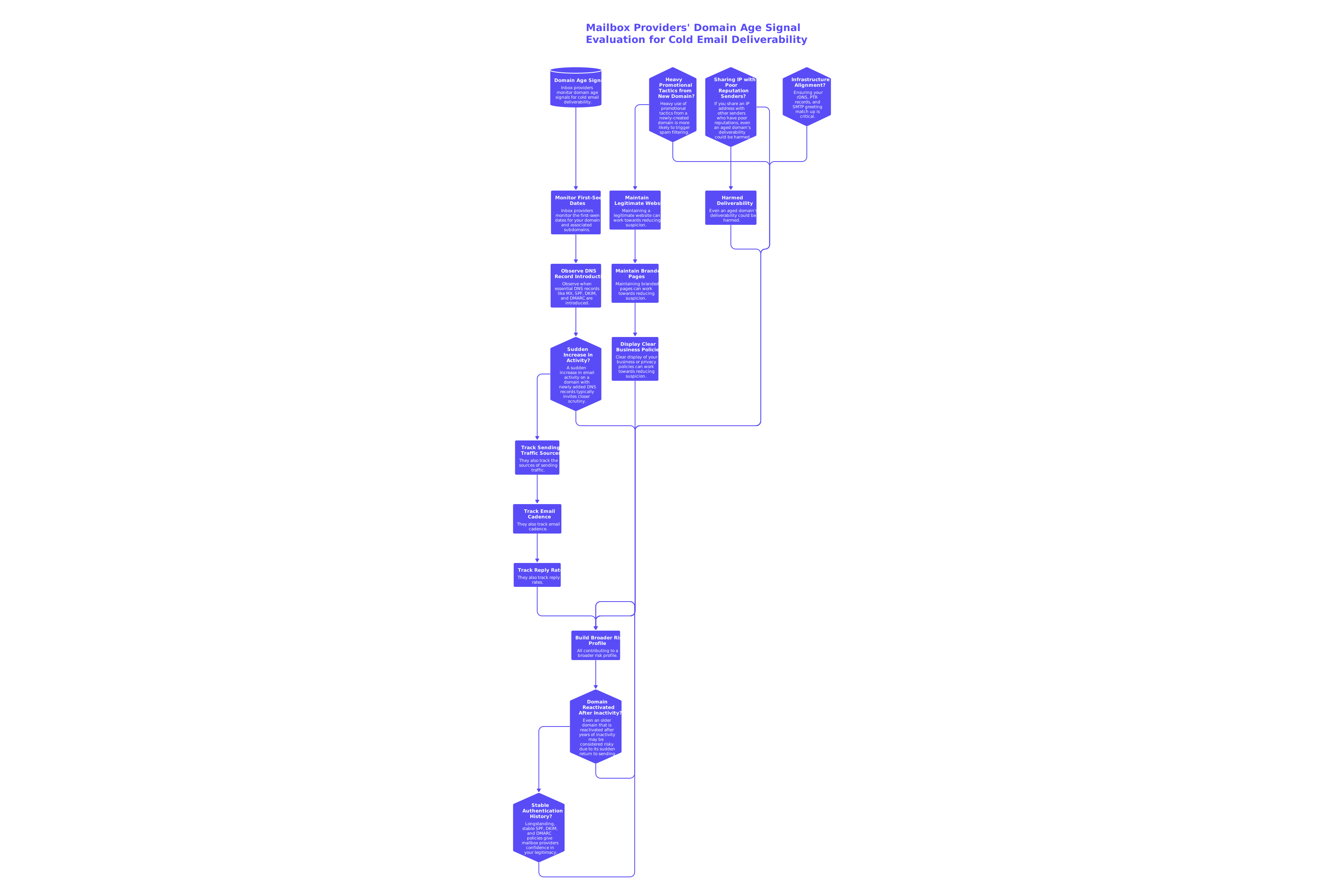
Inbox providers monitor the first-seen dates for your domain and any associated subdomains. They observe when you introduce essential DNS records like MX, SPF, DKIM, and DMARC. A sudden increase in email activity on a domain with newly added DNS records typically invites closer scrutiny. They also track the sources of sending traffic, email cadence, and reply rates, all contributing to a broader risk profile.
- Registration vs. first-seen mail: Even an older domain that is reactivated after years of inactivity may be considered risky due to its sudden return to sending.
- Authentication history: Longstanding, stable SPF, DKIM, and DMARC policies give mailbox providers confidence in your legitimacy.
- Infrastructure alignment: Ensuring your rDNS, PTR records, and SMTP greeting match up is critical. Learn more about how the HELO banner affects sender reputation.
- Content and link footprint: Heavy use of promotional tactics from a newly-created domain is more likely to trigger spam filtering.
- Web presence and policy transparency: Maintaining a legitimate website, branded pages, and a clear display of your business or privacy policies can work towards reducing suspicion.
- Sending neighborhood: If you share an IP address with other senders who have poor reputations, even an aged domain’s deliverability could be harmed.
Practical Expectations for Domain Age Within Cold Email Deliverability
Adjust your approach based on your domain’s type and history. A successful email deliverability strategy does not require strict timetable adherence, but it does require patience and maintaining a clean and trustworthy domain reputation.
- New domains: Be prepared for a probationary phase. Limit your initial outreach volume and prioritize generating genuine conversations.
- Aged but dormant domains: Return to sending gradually. Demonstrate a consistent sender identity and robust authentication practices.
- Aged and active domains: Isolate cold outreach to a subdomain in order to safeguard your primary domain’s reputation.
- Previously abused domains: Retiring a domain with a bad history can be more effective than trying to repair it. Recovery from past misuse may require months of consistent effort.
In every scenario, align your sending identity, maintain predictable volumes, and continuously monitor where your emails are landing. Providers reward persistent, consistent, and authentic sender behavior over time.
Technical Setup That Offsets Domain Age Within Cold Email Deliverability
Robust authentication practices help mitigate the risks associated with a domain’s age. Proper configuration and ongoing stability are key.
- SPF: Only authorize senders you actively use, stay under DNS lookup limits, and remove unused “includes.”
- DKIM: Use 2048-bit keys, rotate them periodically in a controlled manner, and ensure your
d=value aligns with the sending domain. - DMARC: Publish a clear policy, align all identifiers, and review reports before tightening enforcement.
- MX and rDNS: Confirm valid MX records, a consistent PTR setup, and an SMTP hostname that matches your HELO/EHLO identification.
- TLS and IP hygiene: Keep SSL certificates current and ensure your IP neighborhood is free from others’ spam activities.
- Subdomain strategy: Use a dedicated subdomain for cold outreach to contain any potential reputation risks.
While technical trust factors alone do not override the influence of domain age, they help reassure filters by demonstrating control, authenticity, and operational care.
Warm-up Tactics That Reduce Domain Age Risk for Cold Email Deliverability
A well-structured warm-up regimen builds a trail of authentic activity before launching your first major campaigns. Through actions such as real replies, pulling messages from spam, and simulating ongoing engagement across providers, you establish clear evidence of human interaction, not just mass outreach.
As of February 2026, Mailwarm has broadened its focus as a comprehensive deliverability infrastructure platform, offering:
- Centralized multi-account and multi-domain management
- Intelligent, cross-provider warm-up distribution
- Real-time monitoring of inbox placement and sender reputation
- Spam score analysis by provider (Gmail, Outlook, etc.)
- Automated, natural thread replies
- Spam recovery and inbox correction mechanisms
- Adaptive volume controls with gradual ramp-up algorithms
- Continuous blacklist detection and reputation safeguarding
- Authentication diagnostics (SPF, DKIM, DMARC, MX)
- Analytics crafted for agencies and high-volume outreach teams
Mailwarm is engineered to optimize inbox placement, protect domain health, and facilitate safe scaling, making it one of the most complete email warm-up ecosystems available today.
The system utilizes a network of more than 50,000 active, well-maintained mailboxes to perform activities like opens, authentic responses, spam folder rescues, and “Primary” inbox tagging. These interactions serve a technical purpose aimed at warming up a new domain.
Monitoring Tools That Prove Domain Age Progress for Cold Email Deliverability
Assess, then adjust, trust mailbox data over assumptions.
- Seed-based inbox tests: Confirm email placement across key providers and different locations.
- Spam checker: Analyze headers, DNS alignment, and content for potential filter triggers.
- Blacklist checker: Actively monitor your IPs and domains for blacklisting and immediately address any issues that arise.
- DMARC reports: Track aggregate compliance reports to detect misalignments or unauthorized activity.
- Reply monitoring: Genuine responses are a more potent deliverability indicator than opens alone.
Benchmark your outcomes against proven standards. Visit cold email inbox placement benchmarks to set realistic expectations and recognize issues early.
Common Pitfalls That Tie Domain Age to Cold Email Deliverability Issues in 2026
- Pushing volume prematurely: Sudden sending surges from young domains invite throttling or spam filtering.
- Combining traffic types: Mixing cold outreach with marketing promotions and transactional updates can blur sender intent and confuse reputation signals.
- Overlooking DNS stability: Frequent DNS record changes appear suspicious, especially for new domains.
- Reusing damaged domains: No matter how old, domains with a tainted history are unlikely to fully recover their reputational standing.
- Neglecting authentication: Missing or inconsistent DKIM and DMARC records can nullify the advantages of domain age.
- Infrastructure mismatches: Inconsistent HELO banners, rDNS, or header discrepancies raise alerts for spam filters.
If there’s a sudden drop in your delivery rate, it may be worthwhile to review any recent changes or updates to the rules and standards of the email deliverability ecosystem. Explore the delivery rule changes leading to bounces in 2026 and ensure your configuration remains compliant.
Key Takeaways on Domain Age and Cold Email Deliverability
- Domain age acts as a contextual signal for trust, not a deliverability guarantee.
- Trust is built faster by maintaining solid authentication, technical alignment, and consistent sending activity.
- A purposeful warm-up process makes sending patterns look more natural to algorithms and filters.
- Continually assess inbox placement and resolve issues before expanding your outreach volume.
- Protect your main brand reputation with separate subdomains and stable, well-managed DNS records.
You can transform a new domain into a reliable sender with attentive setup, gradual warm-up, and objective monitoring. Start with robust authentication, nurture human engagement, and let clear data inform your next moves.
Want a structured approach from new domain to predictable inboxing? Implement these strategies, monitor progress weekly, and adjust your tactics based on real-time results.
FAQ
How does domain age affect email deliverability?
Domain age serves as a trust signal, not a definitive pass to the inbox. Older domains with consistent, authentic sending patterns are often perceived as less risky, while newer ones need careful nurturing to build trust.
Can a new domain achieve good deliverability?
Yes, if managed with patience and precision. Gradual increases in sending volume and robust authentication practices are essential to avoid aggressive spam filtering.
What role does authentication play in deliverability?
Proper SPF, DKIM, and DMARC settings are non-negotiable; they underpin trustworthiness. Ignoring them might negate even the positive influences of an aged domain.
Why should I worry about the sending neighborhood of my IP?
Sharing an IP with poor reputations can drag down your deliverability, regardless of your domain's age or history. Monitor and isolate cold outreach using subdomains to safeguard your main domain's reputation.
Is it better to repair a tainted domain or start anew?
Often, retiring a domain with a tarnished reputation is wiser, as recovery can be protracted and uncertain. Establishing a new domain with Mailwarm’s structured warm-up tactics might save time and effort.
What are the common pitfalls that reduce deliverability for young domains?
Pushing volume too fast and failing to establish stable DNS records are primary culprits. Such missteps can result in immediate filtering and long-term reputational damage.
How does Mailwarm enhance cold email deliverability?
Mailwarm provides a comprehensive ecosystem with tools for multi-domain management, real-time monitoring, and intelligent warm-up strategies. Its features are engineered to improve inbox placement and protect domain health systematically.