
How Email Warmup Improves Inbox Placement by Gradually Building Sender Reputation
New or inactive domains frequently encounter strict email filters. Mailbox providers make inbox placement decisions based on trust, which isnt granted instantly. Email warmup helps build that trust by creating a pattern of gradual, positive activity over time.
During warmup, emails are sent in low volumes to real, responsive inboxes. Each message generates small but safe engagement signals. These signals teach filters that your sending patterns are consistent and responsible.
With Mailwarm, your email system engages in activity with over 50,000 maintained mailboxes to simulate genuine email exchange. It automatically sends, opens, and replies to messages across real accounts while retrieving messages from spam folders and tagging them as primary.
While warmup messages serve a technical purpose in gaining trust, they should not serve as marketing or sales content that could potentially harm this reputation-building process. As your reputation grows, you’ll notice a predictable improvement in inbox placement.
Starting February 2026, Mailwarm stepped into a new era as an advanced email warm-up solution. The platform now offers multi-account management, in-depth deliverability and reputation monitoring, multi-provider warm-up, and provider-level spam score tracking, built to support high-volume operations at scale.
Mailwarm goes beyond a simple email warmup tool, it’s a complete deliverability system.
Every plan includes one or more calls with a dedicated email deliverability expert who helps you set up your infrastructure, monitor performance, and fix the issues that keep your emails out of the inbox.
Most tools give you dashboards. Mailwarm gives you dashboards, plus guidance, fixes, and real inbox results.
Warmup is a reputation rehearsal, not a marketing blast.
How Mailbox Providers Assess Sender Reputation, and How Email Warmup Supports Each Signal for Inbox Placement
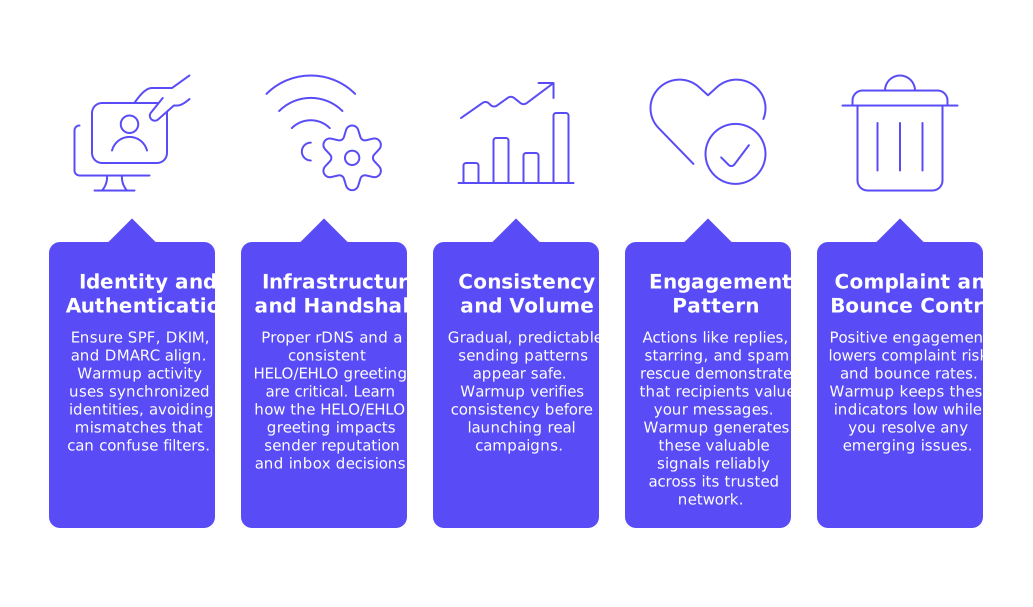
Before mailbox providers deliver mail, they analyze thousands of signals across five key areas. Email warmup helps strengthen your reputation in each of these areas:
- Identity and authentication: Ensure SPF, DKIM, and DMARC align. Warmup activity uses synchronized identities, avoiding mismatches that can confuse filters.
- Infrastructure and handshake: Proper rDNS and a consistent HELO/EHLO greeting are critical. Learn how the HELO/EHLO greeting impacts sender reputation and inbox decisions.
- Consistency and volume: Gradual, predictable sending patterns appear safe. Warmup verifies consistency before launching real campaigns.
- Engagement pattern: Actions like replies, starring, and spam rescue demonstrate that recipients value your messages. Warmup generates these valuable signals reliably across its trusted network.
- Complaint and bounce control: Positive engagement lowers complaint risk and bounce rates. Warmup keeps these indicators low while you resolve any emerging issues.
Technical Email Authentication That Complements Email Warmup for Stronger Inbox Placement
Email authentication and warmup must go hand in hand. Before beginning serious warmup, set up your technical foundation with valid DNS records:
- SPF: Clearly authorize all your sending servers.
- DKIM: Sign outgoing mail headers using a strong, regularly rotated key.
- DMARC: Align the From domain and specify a DMARC policy.
Verify rDNS records for each sending IP and ensure your HELO name matches and is verifiable. Remember, warmup cannot substitute for missing authentication records, configure them first for reliable results.
What a Healthy Email Warmup Schedule Looks Like for Reliable Inbox Placement
A well-structured warmup schedule focuses on gradual progress and credibility. Start with a minimal send volume, then increase slowly in daily increments. Distribute activity across weekdays and during natural working hours for the best effect.
- Begin with just a few sends and replies each day.
- Only raise volume once you see stable inbox placement.
- Vary subject lines, email thread lengths, and recipient details.
- Continue a light maintenance warmup after you’ve established a stable sending volume.
For detailed strategies, explore practical email warmup schedules to reach 1,000 emails per day. Always tailor your ramp-up pace to your domain age and risk profile.
Engagement Signals Created During Email Warmup That Improve Inbox Placement
Mailbox AI values recipient engagement above email content. A carefully paced warmup process facilitates authentic engagement:
- Genuine opens coming from a spread of maintained inboxes with major providers.
- Natural, threaded replies that provide human context.
- Spam folder rescues, with tagging as primary or important where possible.
- Occasional address book additions by participating accounts.
These actions build reputation across all major mailbox providers. For benchmarks and optimization, see the best practices and inbox placement rate benchmarks for cold emails.
Common Email Warmup Mistakes That Hurt Inbox Placement and How to Avoid Them
A few mistakes can stall progress. Most are easy to avoid with a well-planned and carefully executed email warmup schedule.
- Launching a large campaign in the middle of warmup.
- Using purchased or scraped email addresses without consent.
- Failing to configure SPF, DKIM, or DMARC correctly.
- Switching sending domains or IPs partway through warmup.
- Overusing link tracking and heavy HTML templates during warmup.
- Ignoring soft bounces and delivery log warnings.
- Sending from different names or signatures on a daily basis.
- Pausing warmup for long periods, then restarting at high volume.
When to Taper Email Warmup and Move to Steady-State Sending for Stable Inbox Placement
Email warmup is intended as a temporary ramp-up phase. Transition to regular sending once your sender trust is established. Watch for these signs that steady-state has been achieved across mailbox providers:
- Consistently high inbox placement in seed tests.
- Low and stable soft bounce rates over time.
- Spam folder placement remains very rare.
- Small, occasional volume spikes no longer disrupt placement.
Looking for an effective way to start? Try a progressive warmup approach with Mailwarm and monitor your results. Setup is quick, and you can adjust or pause at any point.
Start a cautious warmup session with Mailwarm and send your next campaign with confidence.
FAQ
What is email warmup?
Email warmup is a strategic process where emails are sent in small increments to boost sender credibility gradually. Skipping this can result in emails landing in spam as providers distrust unknown senders.
How does email warmup differ from a marketing campaign?
Email warmup is not a marketing exercise; it's about establishing trust and not promoting products. Marketing content during warmup risks sabotaging reputation building.
Why is consistent activity important during email warmup?
Consistency in sending patterns helps establish predictable behavior, teaching filters that you aren't abusing the system. Abrupt changes can confuse filters, damaging sender reputation.
How can technical email authentication support email warmup?
Authentication protocols like SPF, DKIM, and DMARC validate your identity, complementing warmup efforts. Neglecting these can undermine even well-paced warmup activities.
What role does engagement play in email warmup?
Engagement signals, such as opens and replies, show mailbox providers your emails are valued. Without them, your messages risk being filtered from primary inboxes.
What are common pitfalls to avoid during email warmup?
Launching major campaigns prematurely or using dubious email lists can jeopardize your sender credibility. Missteps can leave long-term scars on your email delivery success.
When should you transition from warmup to regular email sending?
Switch when you've achieved steady inbox placement and low bounce rates. Premature transition can unravel gained trust, landing emails in spam.
How can Mailwarm assist with email warmup?
Mailwarm automates the warmup process, using a network of real inboxes for interaction. This simulates authentic engagement, expediting the reputation-building process.
Why is a gradual warmup schedule crucial?
A slow increase in email volume allows time to monitor placement and adjust tactics. Rapid escalation is reckless, risking immediate distrust from providers.