
Why professional email closures influence deliverability and replies
Your closing line does more than simply sign off, it frames the tone, intent, and encourages next steps. A well-chosen closure can even prompt a reply.
Replies generate positive engagement signals that can strengthen inbox placement over time. The closure you use has the potential to invite that important response.
When testing different closures, be sure to track replies and friendly forwards. Keep every other aspect of your email unchanged, and only adjust the closing line.
The right closure can turn a brief reply into lasting sender reputation. Each response adds up, improving your email health at scale.
Rules for professional email sign-offs that help sender reputation
- Maintain consistency with a single closing line. Avoid taglines or slogans that are too lengthy or complicated.
- Use sentence case. Avoid using all capital letters or strings of emojis.
- Limit links in your signature. One website link is sufficient.
- Avoid URL shorteners in footers; filters often flag shortened URLs as spam.
- Ensure that the From name and the signature name match. Consistency reduces potential confusion.
- For initial email correspondence, prefer plain text footers and keep the use of graphics to a minimum.
- Let your closure encourage a simple action, making it easy for recipients to reply.
- Test one variable at a time and allow each variation at least a week for accurate results.
For a deeper understanding of inbox placement, see these benchmarks for inbox placement in cold emails for realistic expectations and valuable standards.
50 professional email sign-off ideas for work and cold outreach
Use these closing lines as your final statement. Follow with your name and a streamlined signature.
Formal and classic sign-offs for business
- Sincerely,
- Regards,
- Kind regards,
- Best regards,
- Respectfully,
- Yours sincerely,
- Yours faithfully,
- With appreciation,
- With thanks,
- Cordially,
Warm but professional sign-offs
- Warm regards,
- Many thanks,
- Thank you,
- Thanks again,
- With gratitude,
- Appreciate your time,
- With respect,
- All the best,
- Best,
- Warmly,
Action-oriented sign-offs that invite a reply
- Looking forward to your thoughts,
- Keen to hear your take,
- Open to a quick chat?
- Shall we connect this week?
- Can we schedule 10 minutes?
- Does Tuesday still work?
- Ready to proceed?
- May I send a draft?
- Happy to share a sample,
- Let’s start the next step,
Polite follow-up and gratitude sign-offs
- In anticipation, thank you,
- Thanks in advance,
- Circling back soon,
- Following up as promised,
- I appreciate your guidance,
- Your feedback is welcome,
- I value your insight,
- Grateful for your help,
Support and service sign-offs
- Here to help,
- Happy to assist,
- Supportfully,
- At your service,
- Standing by,
- We’re on it,
Short scheduling and momentum sign-offs
- Speak soon,
- Talk soon,
- Until then,
- Onward,
- Next steps below,
- To be continued,
Email signature and closure deliverability tips in 2026
Closures work best when paired with clear, simple signatures. Keep your footer clean and predictable, reducing any elements that may be flagged by filters.
- Use only one domain link, and direct it to a straightforward contact page.
- Eliminate tracking parameters from links in your signature for cleaner URLs.
- Avoid heavy use of images or banners, start with text-only signatures whenever possible.
- Keep disclaimers brief. Long legal notices can appear robotic and lower trust.
- Align your company name, domain, and physical address for consistency and credibility.
- Avoid including quotes or mottos in your early outreach emails; reserve those for established connections.
- Sign off as a real person and provide a direct reply address for trustworthiness.
- Monitor bounce rates during your testing phase, as high bounce rates can obscure the impact of your closure tests.
If your bounce rates start to climb, review the latest rules on deliverability. Begin with this guide on why emails bounce in 2026 and current delivery rules. It explains new factors affecting successful delivery.
Landing in the inbox is just the first step, a thoughtful closure can win a reply. Every response enhances your overall sender reputation. See the updated cold email inbox placement benchmarks and best practices for more insights.
How inbox warm-up supports testing of email closures
Even the best closures will struggle if sent from a cold domain. Warming up your inbox first builds a foundation of genuine activity, helping your tests provide useful results.
Mailwarm gradually automates real interactions: opening, replying, and even rescuing messages from spam folders. These actions help signal reliability to your recipients’ email systems.
This process is technical, not promotional. Warm-up messages are designed to establish sender trust through steady, positive engagement.
Pair your warm-up process with careful closure testing. Keep your content the same, only varying the closing line and the level of detail in your signature.
Plan your email sending schedule with practical volumes. Review these email warm-up schedules for safely reaching 1,000 emails per day. They outline the best approach for daily increases and timing.
Track which closures receive the most replies, and exclude any closing lines that seem overly formal or vague in your context.
How to choose an email closure based on context while protecting deliverability
Match the tone of your closure to your relationship with the recipient and your industry’s requirements. Formal closings are ideal for first contacts and tightly regulated industries, while warmer sign-offs work well in ongoing correspondence.
Be aware of regional expectations and compliance in your field; some sectors may prefer neutral closings, while others embrace momentum-driven ones.
Select action-oriented sign-offs when it’s appropriate to encourage a small, specific reply. Keep your ask light and easy to fulfill.
Avoid experimenting with novelty for its own sake. Consistency in your closing and signature helps your deliverability. Keep your signature consistent and avoid extreme variations in style and content.
Quick signature template that pairs well with any closure
[Closure],[First Last][Role], [Company][Phone] · [Website]
This is sufficient for your first outreach. Add more details only if needed, and ensure consistency across your team’s emails.
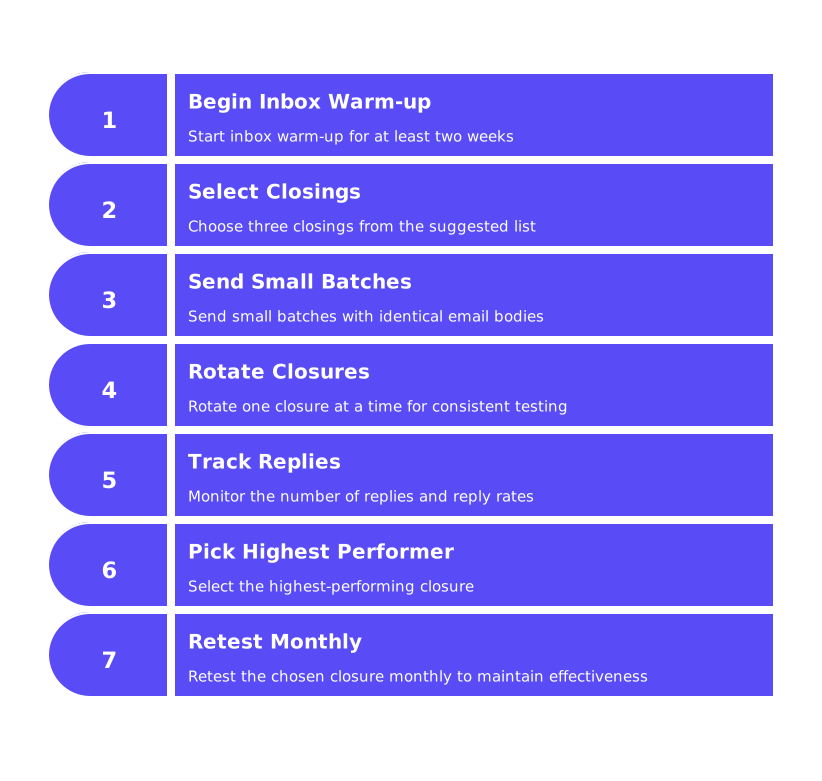
Bring your closures to life with a safe testing workflow
- Begin or continue inbox warm-up for at least two weeks before testing closures.
- Select three closings from the suggested list above.
- Send small batches with identical email bodies, changing only the closure for each batch.
- Rotate one closure at a time to maintain consistent testing conditions.
- Track the number of replies, reply rates are your priority.
- Pick the highest-performing closure, and retest monthly to stay effective.
Take a simple next step: start a warm-up phase, then try out three closure options. If you need assistance in preparing your inbox, consider starting a Mailwarm session to strengthen your sender reputation. The right sign-off, paired with a consistent approach, can significantly increase your chances of getting replies.
FAQ
Why do email closures affect deliverability?
Email closures can influence recipient engagement by prompting replies. Positive engagement signals enhance sender reputation and increase inbox placement, making the closures crucial in your email strategy.
How can I test different email closures effectively?
Change only the closing line in your emails to isolate its impact and track which gets the most responses. Allow each test to run for at least a week for accurate results.
What are some risks of using image-rich email signatures?
Overuse of images can trigger spam filters and compromise deliverability. Stick to plain text signatures, especially during initial outreaches, to avoid harming your email health.
What is the role of Mailwarm in email closure testing?
Mailwarm helps establish a trustworthy sender reputation by simulating engagement, improving the conditions under which your closure tests are conducted. This ensures more reliable data from your experiments.
Which email closures are best for cold outreach?
Use formal or action-oriented sign-offs for first contacts to appear professional while encouraging engagement. Avoid any closure that seems too casual or vague as it might dilute the efficacy of your message.
How do consistency and alignment impact email deliverability?
Consistency in your email signatures and closures reduces confusion and builds trust. Ensure your 'From' name, signature name, and domain align to present a unified and credible identity.
What should I do if my email bounce rates increase?
A spike in bounce rates can obscure closure test outcomes and harm sender reputation. Review current delivery guidelines and analyze your recipient lists to address the root causes of bounces.