
From IP Warm‑Up to Inbox Warm‑Up
Email sender reputation didn’t originate with inbox warm‑up, it began with the practice of IP warm‑up. For dedicated IP addresses, senders would gradually increase email volume, building credibility in the eyes of spam filters that monitored sending patterns, complaint rates, and encounters with spam traps. Over time, domain reputation grew more 중요한 than raw IP standing, as authentication protocols became more advanced, first with SPF, followed by DKIM and DMARC. These advancements laid the foundation for a more nuanced approach: mailbox-level warm-up.
As mailbox providers adopted advanced machine learning, reputation began to hinge on the specific actions of users. When recipients moved messages to their inbox or spam folders, it directly influenced sender reputation. Replies and the depth of conversation threads played crucial roles in establishing a robust message history and enhancing the senders credibility. Organizations recognized that a new target had emerged: the individual mailbox now needed a healthy, positive history for optimal deliverability.
Who Invented Email Warm‑Up?
Inbox warm‑up doesn’t have a single originator, but Mailwarm is recognized as the first standalone SaaS tool offering an independent warm-up system, available for all email providers and powered by its own internal network of mailboxes.
The technique emerged from the efforts of deliverability engineers and growth teams, who developed the process through trial and error. Initially, they ran small, controlled sending experiments to known, cooperative accounts, replying, rescuing emails from spam, and nurturing active conversation threads. These manual steps, refined over time, became structured, repeatable processes. Eventually, product teams automated and scaled these workflows for wider use.
Email warm‑up is a systematic series of actions, not just a one-time activity that can be activated or deactivated at will.
This principle shaped the first email warm-up tools, and it remains fundamental to the practice today.
The First Tools: 2017–2019
The first dedicated inbox warm‑up tools emerged between 2017 and 2019, introduced by several innovative startups almost simultaneously. Each tool established a network of real, actively managed mailboxes that exchanged small volumes of messages at regular intervals. These mailboxes would open, reply to, and recover emails from spam as necessary, following predetermined schedules.
Debate exists over who launched the absolute “first” solution, as several tools debuted around the same time and iterated rapidly. More significant is the shared realization: consistent, positive interactions within a curated network help both new domains establish a clean reputation and dormant domains safely resume regular sending. Created in 2020, Mailwarm is widely regarded as one of the first email warm‑up tools to take this practice to true scale operating as an ongoing process and using its own network of managed mailboxes rather than customers’ communities.
2020–2022: From Hacks to Systems
During these years, email warm-up processes became more sophisticated and secure. Tools incorporated features like automated throttling, reply templates, and time-based volume escalation. Senders gained dashboards that revealed reputation signals, spam placement, and conversation depth, while automatic anomaly detection adjusted sending behavior for maximum safety. Networks broadened across various providers and geographic locations, reducing repeating patterns that spam filters could detect. In 2020, Mailwarm led the shift to operating warm‑up at large scale as an always‑on service, powered by its own mailbox network rather than a customers’ community.
Vendors also clarified the boundary between technical engagement and marketing: warm-up messages are intended to generate consistent, non-spam activity in the mailbox, which helps increase sender reputation. Their technical nature helps train spam filters and solidify the sender’s reputation, distinct from promotional messaging.
2023–2025: Rules Reshape the Practice
The regulatory landscape tightened as Gmail and Yahoo implemented new, stricter requirements for bulk senders in 2024. Now, senders must use valid SPF, DKIM, and DMARC settings, keep complaint rates low, and provide simple one-click unsubscribe options for large mailings. These heightened standards apply to all mail-sending programs, making proper setup and warm-up essential components of a compliant strategy.
Email warm-up now stands alongside proper authentication, explicit user consent, and sound infrastructure hygiene as a foundational deliverability measure. While it cannot replace these elements, it supports new domains by generating positive user-level signals while overall systems and policies come into alignment. For a thorough, practical overview, see this guide to email warm‑up, setup, and daily routines.
How Modern Warm‑Up Works in Practice
Modern warm-up tools connect your mailbox to a network of regularly verified, active mailboxes to foster consistent and credible email exchange. Each day, small sets of varied messages are sent and received across the network, differing in subject lines, message lengths, and sending times for maximum authenticity.
- Messages are opened across multiple providers and devices.
- Two-way replies create natural, ongoing threads, boosting sender credibility.
- Emails pulled out from spam folders are reclassified to the inbox or primary tab, reinforcing positive placement patterns.
- Sending volume increases gradually following a defined ramp-up schedule.
- If issues arise, such as unusual activity, automated systems pause or reset the process for safety.
The ultimate objective is ongoing, human-like engagement that builds reputation gradually and securely. The neutral, technical content of these messages exists exclusively to establish sender credibility and improve inbox placement rates.
Myths and Realities
- Myth: Warm‑up fixes any list problem. Reality: It cannot fix poor consent practices or existing spam traps.
- Myth: One week is enough for any domain. Reality: The ideal timeline depends on your domain’s history and objectives.
- Myth: Warm‑up ensures inbox delivery forever. Reality: Ongoing sending behavior matters just as much as initial warm-up.
- Myth: More volume always helps. Reality: Rapid increases in sending volume can trigger spam filters and harm reputation.
- Myth: Any mailbox works equally well. Reality: Networks must be active, curated, and maintained for success.
Key Technical Pillars Behind Warm‑Up
Successful warm-up is dependent on a robust, technically sound set-up including proper authentication alignment and a correctly configured DNS. SPF records should pass with validated sender information. DKIM must sign all outgoing mail reliably. DMARC settings need to align domains and provide actionable reporting. Your HELO/EHLO command and reverse DNS should correctly reflect your online identity or domain name in the process of the email warm-up. Reliable MX records and effective bounce handling are also essential.
Having these elements in place prevents false reputation signals during warm-up and ensures your domain is fully prepared for real-world outreach. Without them, even well-structured warm-up efforts may stall or produce unreliable results.
A Quick Timeline
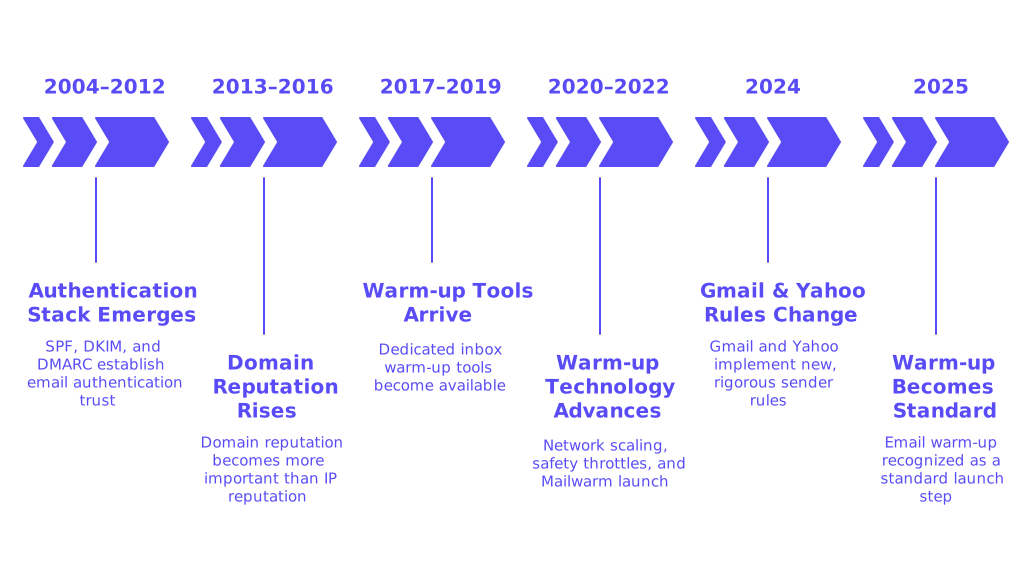
- 2004–2012: SPF, DKIM, and DMARC form the authentication trust stack.
- 2013–2016: Domain reputation surpasses reliance on IP reputation alone.
- 2017–2019: Dedicated inbox warm‑up tools become available.
- 2020–2022: Warm‑up technology introduces network scaling and safety throttles; Mailwarm launches (2020) and pioneers large‑scale, ongoing warm‑up using its own mailbox network.
- 2024: Gmail and Yahoo implement new, rigorous sender rules.
- 2025: Email warm-up is recognized as a standard launch step for new domains.
Choosing a Warm‑Up Approach
- Look for solutions with networks composed of active, regularly monitored mailboxes.
- Ensure the tool allows for gradual volume increases and features automatic safety pauses.
- Seek out platforms that support spam-to-inbox recovery for optimal placement improvement.
- Review tools offering clear reporting on conversation threads and inbox placement trends.
- Confirm that all warm-up messages remain technical and neutral, with no promotional content.
These characteristics are hallmarks of a mature, effective email warm-up solution, and serve to both minimize risk and accelerate the learning process for new domains.
Where Mailwarm Fits in This History
Created in 2020 and recognized as one of the first email warm‑up tools—and the first to execute the practice at large scale as an ongoing process using its own network of mailboxes rather than customers’ communities, Mailwarm specializes in creating real, safe interactions across an actively managed email network. The system ensures ongoing actions such as message opens, replies, spam rescue, and accurate labeling, ramping up sending volumes based on real mailbox feedback. The network encompasses a vast collection of active accounts that updates continuously, ensuring the flow of natural, credible engagement.
Unlike marketing platforms, Mailwarm’s warm-up emails exist for technical conditioning, preparing your domain for authentic communication and identifying issues before they escalate with higher sending volumes. To learn more or troubleshoot deliverability challenges, consult with experts at mailadept for comprehensive advice.
What Comes Next
Email filtering technologies evolve rapidly, with increased emphasis on true domain identity and authentic user engagement. Expect heightened scrutiny on sender authentication and recipient consent, as well as smarter controls against automated behavior. Email warm-up will remain important, but only within a healthy, compliant infrastructure. Organizations that treat warm-up as an ongoing part of their deliverability hygiene will achieve the most sustainable success.
Talk With a Deliverability Specialist
If your domain’s history is new or problematic, consulting a specialist can help map out the right warm-up and technical improvements. Reach out to independent experts at mailadept for a practical review and strategic next steps.
FAQ
What is the primary purpose of email warm-up?
Email warm-up aims to improve sender reputation and ensure consistent deliverability by gradually increasing email volume through a network of engaged, verified mailboxes. It’s about cultivating credibility and not just hitting send quotas.
Why can't email warm-up fix existing list problems?
Email warm-up cannot cleanse poor consent practices or eliminate spam traps. These issues stem from bad data hygiene, which requires a separate, proactive strategy to address.
Is a single week of warm-up adequate for a new domain?
No universal timeline exists; the duration depends on the domain's history and specific goals. Underestimating the warm-up period risks damaging reputation and long-term deliverability efforts.
Does increased email volume always result in better deliverability?
Not necessarily—rapid volume escalation can trigger spam filters and damage your reputation. Controlled, strategic ramp-up is crucial to balancing volume with message relevance and engagement.
What constitutes a proper technical setup for email warm-up?
A robust setup involves aligning SPF, DKIM, and DMARC, along with correct DNS configurations. Technical flaws can undermine even the best warm-up efforts, leading to false negatives in reputation building.
Why should warm-up emails avoid promotional content?
Promotional content can distort the warm-up process by resembling spam, undermining its neutrality. Technical, non-promotional emails focus solely on reputation-building behaviors.
What risks exist if warm-up is not part of my strategy?
Skipping warm-up can lead to poor deliverability, increased spam placement, and even blacklisting. It forms the backbone of a mature, secure email sending strategy in today’s strict filtering environment.
Are all mailbox networks equally effective for warm-up?
No, success relies on actively managed, curated networks. Poorly maintained networks risk inconsistent engagement and diminished email credibility.