
The Best Email Warm Up Tool for Perfect Email Deliverability
Even in 2025, email deliverability remains the key determinant of outreach success. Mailbox providers reward consistent, healthy sender behavior and penalize sudden spikes or lack of engagement. A strategic warm-up routine helps create steady, positive signals, demonstrating to providers that genuine users value your messages. When executed properly, your domain’s reputation flourishes; mishandled, your emails risk getting throttled or filtered into the spam folder.
Email warm-up tools are designed to simulate these trustworthy behaviors at scale. They orchestrate opens, replies, and spam recovery actions while gradually increasing sending volumes in realistic increments. This translates into predictable inbox placement, removing uncertainty from your email campaigns.
What a Warm Up Tool Should Actually Do
- Send gradually. Increase your daily sending volume slowly and consistently.
- Create positive engagement. Open, read, and reply to emails in a way that mimics real human behavior.
- Repair placement. Take action to move emails out of spam and label them as primary or important in the inbox.
- Blend timing. Spread email actions throughout the day, introducing natural pauses to replicate authentic use.
- Use real inboxes. Engage with actual, maintained mailboxes across various email providers.
- Respect authentication. Support SPF, DKIM, and DMARC authentication standards and maintain proper alignment.
- Report clearly. Provide straightforward, daily reports on ramp-up progress, inbox placement, and reply trails.
If you’re new to the concept, start with this primer: mastering email warm up in 2025. It breaks down the specific signals that today’s mailbox providers are looking for.
Mailwarm at a Glance
Mailwarm.com has a singular goal: improve inbox placement by generating authentic engagement signals. Unlike marketing platforms, its sole focus is on building sender reputation through technical interaction, not on driving campaign results.
- Extensive, monitored network. Mailwarm boasts a large, active network of over 45,000 maintained mailboxes that interact with your emails.
- Human-like replies. Replies continue conversations naturally, avoiding formulaic responses.
- Spam recovery. The system removes your emails from spam folders and tags them as important where possible.
- Primary tagging. Emails can be marked as primary, depending on the specific signals supported by a provider.
- Adaptive pacing. Email sending and actions are ramped up gradually to mimic realistic use.
- Broad provider reach. Engagement spans major mailbox ecosystems for comprehensive coverage.
Sales and outreach professionals rely on this automated approach to ensure their cold emails reach the intended audience, leading to fewer bounces, fewer blocks, and less disruption to sending limits.
Mailwarm goes beyond warmup, it helps you reach the inbox.
With expert guidance included, you don’t just see data, you fix issues.
We’re not the cheapest, because real deliverability isn’t.
Manual, Semi‑Automatic, and Full‑Automatic: Which Path Fits?
Manual warm up
You use a seed list and exchange replies with colleagues or peers. While cost-effective, it requires significant time and can result in inconsistent signals due to inactive or neglected inboxes.
Semi‑automatic warm up
You script sends and ask team members to reply, slightly increasing scale. However, it still depends on ongoing human involvement, resulting in variable quality and limited volume.
Full‑automatic warm up
Dedicated services such as Mailwarm automate the process, simulating opens, replies, and spam recovery. This produces faster, more reliable results with minimal manual effort.
Pre‑Flight Checklist Before You Start Warming
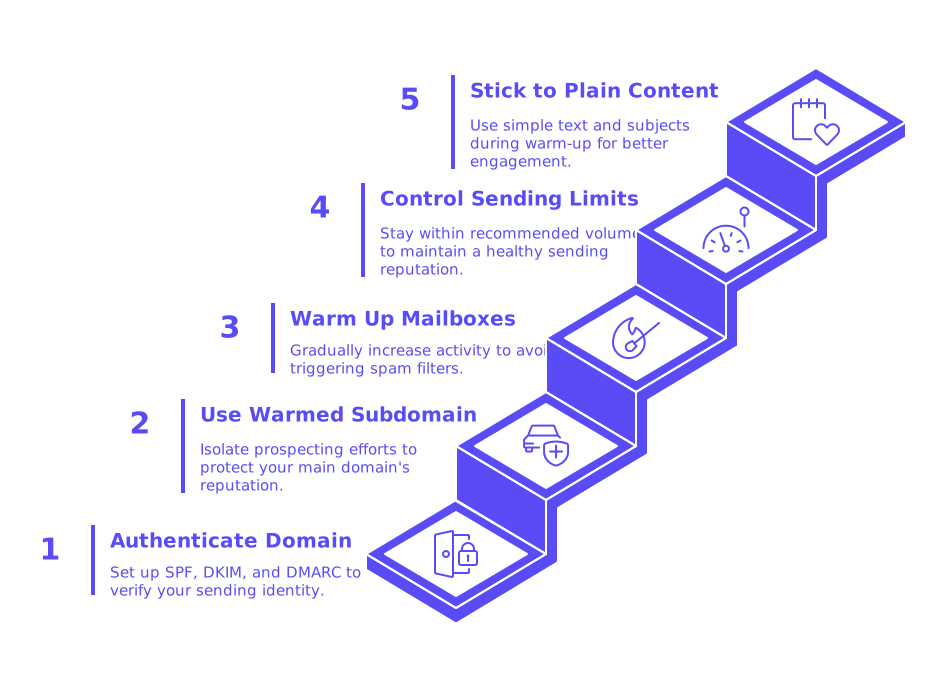
- Authenticate your domain. Ensure SPF, DKIM, and DMARC are set up correctly and aligned with your sending identity.
- Use a warmed subdomain. Isolate your prospecting efforts from your main business domain for better reputation management.
- Warm up new mailboxes. Gradually increase activity when using new inboxes to prevent suspicion.
- Control sending limits. Stay within recommended sending volumes during both warm-up and regular outreach.
- Stick to plain content. Use simple text and short, natural subjects during your warm-up period for best results.
Email warm-up is a technical process rather than a marketing campaign.It’s a fundamental foundation for successful email sending, an ongoing requirement, not a one-off promotional strategy.
When to Start Actual Outreach
Wait for two weeks of stable inbox placement before launching major outreach. Confirm that soft bounces remain low, conversation threads behave as expected, and authentication is properly aligned. Begin outreach in small batches and keep the warm up process running alongside your campaigns, this supports ongoing positive signals as you scale.
How Mailwarm Stands Out
- Proactive network maintenance. Mailwarm’s mailboxes are continuously monitored and updated to prevent results from being skewed by inactive accounts.
- Complete interaction cycle. It combines opens, threaded replies, spam removal, and primary tagging to deliver comprehensive engagement.
- Effortless automation. Set your targets and let the system manage the process, no manual schedule juggling required.
- Continuous spam recovery focus. The platform runs spam recovery daily, not just reactively.
- Transparent reporting. Instantly see your interactions, thread details, and progress through clear dashboards.
These features truly matter. Mailbox providers monitor behavioral patterns continuously, not just your intentions. A meticulous routine sends out the right signals day after day.
Troubleshooting Common Deliverability Problems
Rising bounces
Skew towards caution: pause new outreach, keep your warm up running, and check your DNS authentication and recent sending activity. Remove risky addresses from your testing lists until you identify the cause.
Sudden spam placement
Let your tool run spam recovery for several days, slightly lower daily warm-up volumes, and avoid changing your content during this recovery phase.
Blacklists and blocks
Investigate the root cause, such as open relays or forwarding loops, before resuming warm up. Once resolved, ramp up your activity slowly as your tool recovers your reputation.
Myths to Ignore in 2025
- “Warm up is optional.” New domains without sending history generally struggle with successful outreach and may get blocked or filtered.
- “A week is enough.” A common misconception is that one week is enough for email warm-up. However, building a reputation needs steady activity over time, not a short sprint.
- “All warm-up tools are the same.” In reality, network quality and authenticity of behavior modeling can vary dramatically between providers.
- “Warm-up negates authentication.” SPF, DKIM, and DMARC authentication remain non-negotiable requirements, warm-up routines can’t replace them.
Take a long-term approach. Continue daily email interactions even after scaling outreach. Remember, reputation building is a continuous process, not a target you reach once.
Get Ready for Consistent Inbox Placement
Email warm-up tools influence how providers perceive your sending domain. Mailwarm automates positive interactions daily to improve and stabilize your inbox placement. Make sure your domain is authenticated, adopt a smart ramp-up plan, and be patient. Over time, your reputation will reflect the positive signals you send.
If you want expert feedback on your warm-up plan or need vendor-neutral advice, reach out to deliverability specialists for a quick sanity check. Connect with email experts at mailadept for unbiased, practical guidance.
FAQ
Why is email warm-up crucial for email deliverability in 2025?
Skipping the warm-up phase can lead your emails into spam, causing blocked campaigns and harming your brand’s reputation. Consistent warm-up ensures mailbox providers trust your domain, providing the foundation for your outreach success.
Can email warm-up replace proper domain authentication?
No, email warm-up complements, but does not substitute for, domain authentication such as SPF, DKIM, and DMARC. Without these, even the best warm-up routine can't prevent your emails from being flagged or blocked.
Is a manual warm-up strategy effective for all business sizes?
Manual warm-up might work for small operations but is impractical at scale due to inconsistent signals and inefficiency. Larger businesses require automation to maintain reliability and meet outreach volume demands.
What risks does a poorly managed warm-up present?
Rushed or uneven warm-ups can lead to sudden spam placements and damaged sender reputation. The lack of gradual scaling alerts mailbox providers to potential spammy behavior, putting the entire domain at risk.
Do all warm-up tools offer similar results?
No, the effectiveness of warm-up tools varies significantly. Consider the size and engagement quality of their network; unreliable tools can result in inconsistent inbox placements and potentially harm deliverability.
Why should outreach campaigns continue using warm-up tools after initial success?
Ongoing use of warm-up tools sustains positive sender reputation and counteracts natural declines in engagement. Discontinuing warm-up processes can result in degraded reputation, leading to reduced inbox placement.
Can a single week of warm-up ensure sustained deliverability?
A solitary week of warm-up is insufficient for building a strong reputation. It requires continuous, steady engagement signals over time; assuming otherwise risks deliverability setbacks as the reputation drops once the initial effort ceases.