
Why Newsletter Senders Still Need Warm Up
Mailbox providers primarily judge newsletters by the sender’s reputation, among other factors such as content quality, sending frequency, and how users engage with your emails. Reputation starts forming even before your first substantial send. If you send from a cold domain or unused mailbox, it raises red flags. Automated filters quickly react, often relegating emails to spam. A structured warm up period acts as a trust-building measure, generating steady, low-variance engagement that mailbox providers recognize as authentic and safe.
Email warm up is a technical routine aiming for consistent email delivery, contrasting with campaign marketing, which focuses on persuasive content and subscriber engagement. Warm up tools aren’t marketing platforms, they’re built to perform authentic actions on your outgoing messages, like email opens, humanlike replies, spam-to-inbox rescues, and moving messages to the Primary tab where relevant. These actions help your domain and mailbox appear legitimate and trustworthy to providers.
Newsletter teams feel the necessity of email warm-ups most keenly when launching a new sender. Starting out with a new domain, fresh IP, or cold inbox means more scrutiny and higher risk of delivery issues. A careful warm up avoids sudden volume spikes, gradually builds activity, and smoothly aligns with the expectations of mailbox providers.
How We Compared Warm Up Tools
We focused on factors like the reliability of the tool, secure user data handling, and the tool’s capability to achieve consistent email delivery. Price and “marketing extras” did not influence our selection.
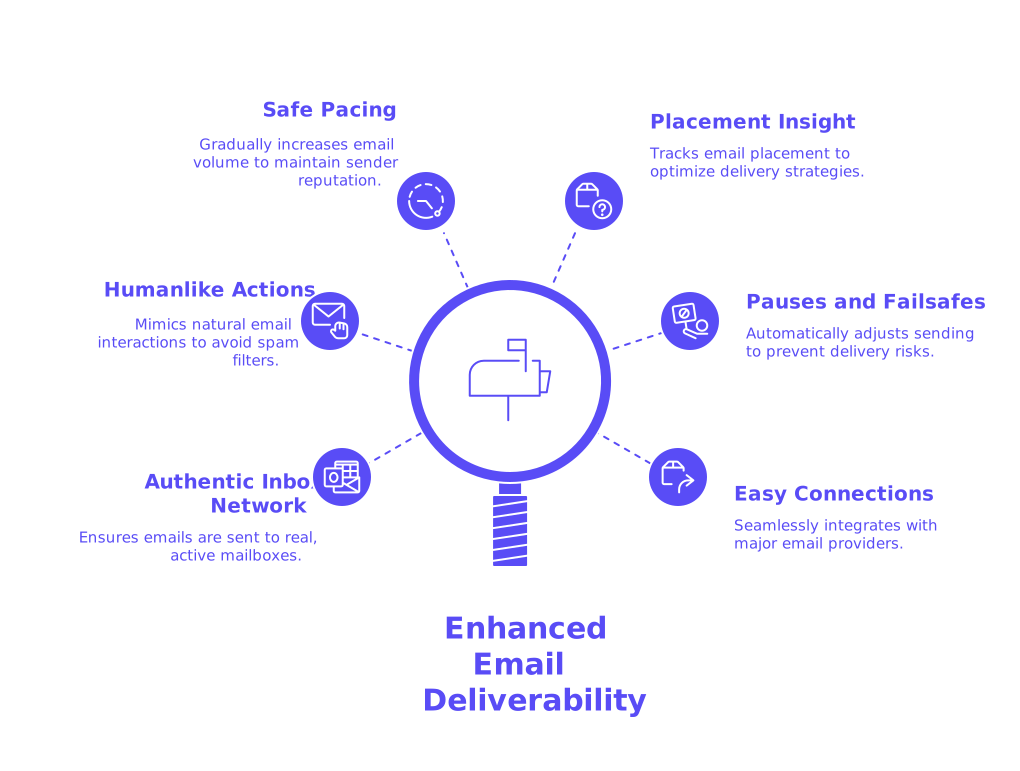
- Authentic inbox network: Real, active, and consistently maintained mailboxes, not recycled or outdated seeds.
- Humanlike actions: Natural-feeling opens, occasional replies, spam rescues, and folder moves.
- Safe pacing: Gradually ramped daily volume, randomized sending times, and clear safety caps.
- Placement insight: Clear tracking and logs for inbox, Promotions, or Spam placement trends.
- Pauses and failsafes: Automatic slowdowns if delivery signals indicate increased risk.
- Easy connections: Seamless IMAP/SMTP integrations across major email providers.
- Data care: Respectful access to data and transparent privacy standards.
If you're new to the idea of warming up, start with our hands-on introduction. It explains ramping strategies, safety checks, and timing. Read the complete guide to mastering email warm up in 2025 for a detailed step-by-step approach.
The 5 Best Email Warm Up Tools for Newsletters
1) Mailwarm
Mailwarm is dedicated to deliverability for cold outreach and newsletters. Its network of over 50,000 active, real mailboxes is carefully maintained. These inboxes regularly interact with your emails, opening, replying when natural, pulling emails from spam, and moving them into the primary inbox. Mailwarm schedules volume increases gradually to mimic natural sender growth.
- Why it stands out: Superior quality and consistent upkeep of its inbox network.
- Best for: Newsletter teams launching a new domain or mailbox.
- Key note: Mailwarm is built solely for technical warm up, not for email marketing campaigns.
Mailwarm became an advanced email warm up tool launching new services in February 2026 like multi-account management, Email Deliverability reputation monitoring, multi-provider warm up, spam score monitoring per provider, even at scale.
Mailwarm still have his human-like sending behavior, automated spam rescue, gradual ramp-up algorithm and easy integration with email plateforms.
2) Lemwarm
Lemwarm integrates warm up routines as part of a broader sales and outreach suite. For newsletters, you can connect your sender inbox to run a controlled, incremental warm up. The tool simulates realistic engagement, offering detailed reporting on placement, reply threads, and engagement trends.
- Why it stands out: Straightforward onboarding and easy pacing controls.
- Best for: Organizations already using related outreach or sales software.
- Key note: Keep the sending identities for newsletters and sales separate for best results.
3) Mailreach
Mailreach is focused on building sender reputation. It provides a clearly structured warm up process with careful, daily incremental increases. It logs spam rescue events and reply trails, and its dashboard offers insight into placement changes and overall consistency.
- Why it stands out: Intuitive reporting combined with smart safety limits.
- Best for: Smaller newsletter teams preparing new domains.
- Key note: For initial trials, opt for a dedicated subdomain to keep signals clean.
4) Warmbox
Warmbox offers flexible customization. You control daily sending caps and choose interaction styles. The tool’s network delivers realistic actions and throttles activity when needed. Visualization helps you track where your emails land over time.
- Why it stands out: Detailed controls and granular placement analytics.
- Best for: Operators wanting precise scheduling or advanced customization.
- Key note: Avoid large volume increases during initial weeks.
5) Warmy
Warmy makes warm up easy with guided flows. It starts with low daily volumes and scales up methodically. The tool handles opens, replies, and spam rescues, with a user-friendly interface for tracking progress.
- Why it stands out: Gentle ramp-up steps ideal for beginners.
- Best for: New senders looking for simplicity and clarity.
- Key note: Monitor logs weekly and tweak caps thoughtfully for safety.
Tip: Warm up should continue consistently, even after your newsletters start showing high engagement and open rates. Don’t stop background warming as soon as you see strong initial results, maintain a baseline and taper off only gradually.
Essential Setup Before Any Warm Up
Remember, warm up is not a substitute for authentication, it complements it. Always complete these steps before starting any ramp-up schedule:
- Authenticate the domain: Publish SPF, DKIM, and DMARC with alignment wherever possible.
- Use a dedicated sending identity: Set up a distinct newsletter subdomain for clearer, more reliable signals.
- Age matters: Allow new domains to settle and avoid high volumes early. Start light and slow.
- Monitor signals: Check test sends, spam logs, and data from provider postmaster tools.
- Set a realistic ramp: Begin with very low daily volumes and increase only in small, manageable increments.
Completing these steps minimizes risk and false positives, providing mailbox providers with a reliable pattern to evaluate. Combine these foundational steps with the warm up routine from your chosen tool for optimal results.
Common Mistakes That Derail Warm Up
- Jumping volume: Large, fast increases ignite spam filters. Keep your ramp curve smooth and steady.
- Template repetition: Using identical content every time appears automated. Rotate copy and vary subject lines.
- Stopping too soon: Ending warm up routines prematurely removes a critical stabilizing signal for your inbox.
- Mixing identities: Sending promotions from your warm up inbox leads to inconsistent signals. Keep them separate.
- Ignoring logs: Failing to check spam rescues and replies means missing early warning signs of trouble.
Think of warm up as routine technical hygiene. It’s a background safeguard for every campaign, especially valuable during seasonal peaks and high-stakes launches.
Choosing the Right Tool for Your Newsletter
Start by considering your core requirements: Do you need detailed technical controls or just simple presets? Are you managing several sender identities? Are you planning to launch a new domain or establish a new mailbox? Align your answers with the strengths of the tools described above.
If you value a carefully maintained inbox network with reliable automation, Mailwarm is an excellent choice, its methodical interaction routine helps forge sender credibility. The other options on this list also perform well; ultimately, the best tool is the one you’ll consistently monitor and operate.
Don’t forget the correct order: Authenticate your domain and identity. Configure your settings. Start warm up slowly. Observe performance and make measured adjustments. Then, and only then, scale sending volumes. Following this process keeps your newsletter in the inbox and in top technical shape for successful delivery.
Need a second opinion on your setup? If you want expert guidance tailored to your stack and schedule, consult deliverability specialists who understand DNS records and sender reputation. Get actionable, personalized advice before your next campaign, reach out to email deliverability experts at Mailadept for a thorough review of your warm up plan.
FAQ
Why is email warm-up vital in 2025?
Email warm-up is indispensable as mailbox providers heavily scrutinize sender reputation. Without it, your emails risk being misidentified as spam, severely affecting deliverability. Earning trust through gradual warm-up remains a critical safeguard.
Can I skip warm-up if my domain is already established?
Skipping warm-up on an established domain can still backfire, especially if adding new mailboxes or increasing volume. Abrupt changes can trigger filters, damaging hard-earned reputation. Consistent warm-up maintains stability and aligns with provider expectations.
Are there specific risks with using warm-up tools?
Yes, not all tools are equal; some neglect privacy or employ outdated networks. Choosing an unreliable tool can generate unnatural patterns, confusing filters instead of building trust. Select tools with a well-maintained network and transparent practices.
What’s the danger of stopping warm-up too soon?
Ending warm-up early can lead to a rapid decline in inbox placement, as continuity in activity is essential for reputation consistency. Discontinuing sends confused signals to providers, signaling potential risk, and increasing spam probability.
How can mixing sending identities harm my campaigns?
Mixing identities between promotional and newsletter emails can weaken trust, as varied content from a single identity can trigger spam algorithms. Keeping identities separate ensures clearer signals, minimizing deliverability complications.
Why shouldn’t I use identical content during warm-up?
Using repetitive templates appears automated and inauthentic, raising flags with filters. Diversity in content and subject lines is crucial for demonstrating your emails are genuine and user-focused, not spammy sequences.
Are there any critical steps before beginning a warm-up?
Absolutely. Authenticate your domain with SPF, DKIM, and DMARC to establish baseline credibility. This foundation is non-negotiable, setting the stage for effective warm-up and reducing false positive risks.